Free UK MOT, tax and vehicle checksOfficial DVSA & DVLA dataNo sign-up · UK vehicles only

Is Your Van's MOT in Date? Check Light Goods Vehicles Here

Enter a registration to see if the MOT is valid, the expiry date and how many days are left. Free, instant and based on official DVSA data.

Free. No sign-up. We never show owner details.

Demo mode: results are sample data. Try AB12CDE, CLOCK1, DIESEL1, EV21, EXPIRED1 or NEWCAR.

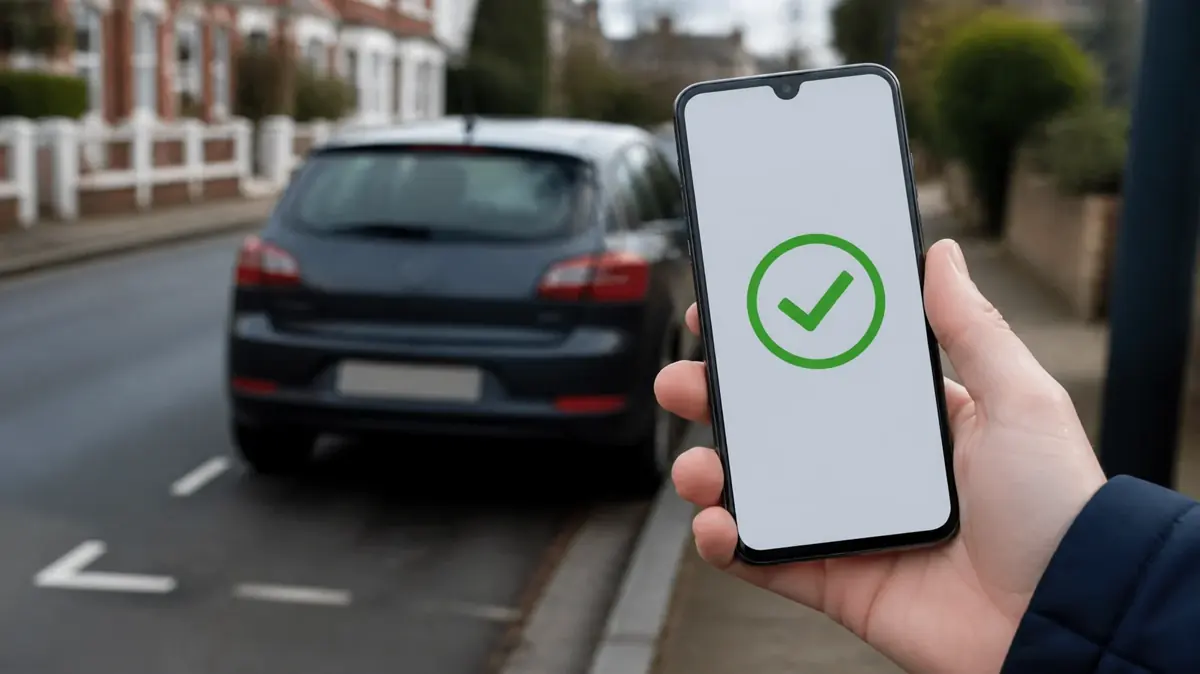
Person checking a car's MOT status on a smartphone beside a parked car

A van MOT check shows whether a van has a valid MOT today and when it expires. For anyone who works from a van, the date matters more than usual: an expired MOT can take the vehicle, and the day’s work, off the road. Enter the registration in the checker above and MOT Check Now returns the MOT status and expiry date held by the DVLA, with the days remaining. This page covers light goods vehicles, meaning vans up to 3,500kg, which take the standard MOT rather than the annual test used for heavier lorries.

It goes further than the date. Below you will find which weight bands apply, the maximum fee for each, what the tester looks at, the areas where vans commonly run into trouble, who is exempt, how deep the recorded history goes and how to read it when you are buying a used van. Everything on the page is drawn from official GOV.UK guidance and the DVSA and DVLA data fields, and where a figure is not published in those sources we describe the point without inventing a number.

Quick answers

  • Do vans need an MOT? Yes, vans and other goods vehicles up to 3,500kg do, unless exempt. Heavier vehicles take an annual test instead.
  • Maximum fee: £54.85 up to 3,000kg and £58.60 from 3,000kg to 3,500kg. No VAT is charged.
  • First MOT: generally by the third anniversary of registration, then every 12 months.
  • Earliest renewal that keeps your date: one month minus one day before expiry.
  • No valid MOT: a fine of up to £1,000, with exceptions for driving to a pre-arranged test or to or from a repair.
  • Dangerous defect: the van must not be driven. Driving it can mean a fine of up to £2,500, a ban and 3 penalty points.
01

Key facts at a glance

Question Answer
Weight limit for the MOT scheme Up to 3,500kg
Fee cap, goods vehicle up to 3,000kg £54.85
Fee cap, goods vehicle 3,000kg to 3,500kg £58.60
VAT on the fee None charged
First test Generally by the 3rd anniversary of registration, then every 12 months
Early-test window Up to one month minus one day before expiry
Free partial retest Van left at the centre for repair, retested within 10 working days
Fine, no valid MOT Up to £1,000
Fine, driving with a dangerous defect Up to £2,500, a driving ban and 3 penalty points
Exempt Electric goods vehicles registered before 1 March 2015, tractors, qualifying historic vehicles
History available Tests in England, Scotland and Wales since 2005
Northern Ireland Run by DVA, a separate service
02

How to check a van’s MOT

  1. Get the registration. Use the plate on the van itself, or the V5C if you are the keeper. Fleet managers can work down a list of plates one at a time.
  2. Enter it in the checker. Capitals and spaces make no difference.
  3. Check the details match. Make, colour and fuel type should agree with the vehicle. A van advertised as one thing and recorded as another is worth questioning.
  4. Read the status and the days remaining. Valid with plenty of days is fine. Valid with a few days left means you need a booking now.

The status comes from the DVLA Vehicle Enquiry Service. This site is independent and is not affiliated with the DVLA or DVSA. The official service is at GOV.UK.

What the status words mean

The DVLA record gives one of four MOT status values, and each means something slightly different for a working van.

  • Valid. The record shows a current MOT. Read the expiry date and the days remaining, and plan the next test inside the early-test window.
  • Not valid. The record shows no current MOT. Unless you are driving to a pre-arranged test or to or from a repair, the van should not be on the road.
  • No details held by DVLA. There is no MOT information held for that registration. The usual reasons are a mistyped plate, a van too new to have had its first test, or an exempt vehicle.
  • No results returned. The lookup produced no result. Check the plate, wait a short while and try again.
03

Which vans need an MOT and which do not

Vans and other goods vehicles up to 3,500kg are tested under the MOT scheme, in two weight bands for fee purposes: up to 3,000kg and 3,000kg to 3,500kg. The 3,500kg limit is the dividing line. Lorries, buses and trailers need an annual test instead of an MOT, so a heavier vehicle will not follow the rules on this page.

Some vans are exempt. Electric goods vehicles registered before 1 March 2015 do not need an MOT. Tractors are exempt too, and a small number of historic vehicles qualify if they were built or first registered more than 40 years ago and have not been substantially changed. The exempt vehicles guide explains each case. An exempt van must still be roadworthy, so exemption from the test does not remove your responsibility for its condition.

If your van returns No details held by DVLA, the likely reasons are a mistyped registration, a van too new to have had its first test, or an exempt vehicle. Check those in that order.

04

Van weight bands and MOT classes

The MOT scheme groups vehicles into classes so that each is tested to the right standard at a station approved for it. For vans, two classes matter. A goods vehicle not exceeding 3,000kg design gross weight is tested in class 4, the same class as ordinary cars. A goods vehicle over 3,000kg and up to and including 3,500kg design gross weight is tested in class 7. Many large panel vans, long wheelbase models and some chassis cab and tipper conversions fall into class 7.

The weight that counts is the design gross weight, sometimes called the gross vehicle weight, which is the maximum the vehicle is designed to weigh when loaded. It is not the weight of the empty van. You can usually find it on the vehicle plate fitted by the manufacturer or in the handbook. A small difference in this figure moves the van from one band to the other and changes both the maximum fee and the test station you need, because not every garage is approved for class 7. When you book, tell the garage the make, model and weight band so that the price and the booking are right the first time.

The DVLA record that our vehicle check displays includes a revenue weight field, which can help you identify the van’s weight category. It will not tell you the MOT class directly, so confirm with the test station. Our full guide to MOT test classes sets out every class, including motorcycles, minibuses and larger passenger vehicles.

05

How much does a van MOT cost?

The maximum fees for goods vehicles, with no VAT charged, are:

Goods vehicle weight Maximum MOT fee
Up to 3,000kg £54.85
3,000kg to 3,500kg £58.60

Garages may charge less than the cap, and repairs are not included in it. If you run several vans, ask for a price for a batch of tests, as some garages will agree to a better rate. Other vehicle types are listed on the MOT cost page.

Maximum MOT fee by vehicle type (no VAT) Motorcycle, no sidecar £29.65 Goods vehicle up to 3,000kg £54.85 9 to 12 seat passenger vehicle £57.30 Goods vehicle 3,000kg to 3,500kg £58.60 Garages may charge less than the maximum. Repairs are extra.
Maximum MOT fees from GOV.UK. A van up to 3,000kg shares the car cap of £54.85, while the heavier van band costs a little more.
Maximum MOT test fees Bar chart of maximum MOT fees: motorcycle 29.65 pounds, motorcycle with sidecar 37.80, car 54.85, goods vehicle up to 3,000kg 54.85, 9 to 12 seat passenger 57.30, goods vehicle 3,000 to 3,500kg 58.60. No VAT, garages may charge less. Maximum MOT fees What a garage can charge at mostMotorcycle£29.65Motorcycle with sidecar£37.80Car (up to 8 seats)£54.85Goods up to 3,000kg£54.859–12 seat passenger£57.30Goods 3,000–3,500kg£58.60Maximum fees: no VAT is charged.Garages may charge less. Repairs are not part of the cap.Source: GOV.UK
Maximum MOT fees by vehicle type
06

When is a van’s MOT due?

The general rule is that the first MOT is due by the third anniversary of registration, then every 12 months. Some vehicle types need their first test at one year, so check the first test date on the paperwork or through the checker rather than assuming. The first MOT guide covers the first-test rules.

You can test a van up to one month minus one day before expiry and keep the same renewal date. If the MOT runs out on 15 May, a test from 16 April keeps 15 May as the yearly date. Testing earlier shortens what you get, because the new certificate then runs for one year minus a day from the new pass date. The how early can you get an MOT guide works through examples.

MOT early test window example Calendar-style example: an MOT expiring on 15 May can be tested from 16 April and keep the same renewal date; earlier than that resets the renewal date. The early MOT window Example: MOT expires on 15 MayToo earlyrenewal resetsTest windowone month minus one dayExpiredAPR16Earliest test dateMAY15MOT expires16 April to 15 MayTest in this window and therenewal date stays 15 May.Before 16 AprilRenewal resets to one yearminus a day from the newpass date.Source: GOV.UK
The early-test window

For a working van, aim for the middle of the early-test window rather than the last few days. A failure in the final week leaves you choosing between driving illegally and losing work.

A worked example

Suppose a van’s certificate expires on 15 May. If you test on 20 April, the new certificate runs to 15 May the following year, because the test fell in the window and the renewal date is preserved. If you test on 10 April instead, the window had not opened, so the new certificate runs for one year minus a day from 10 April and the old May date is lost. The earlier test cost you about five weeks of cover, which is a small amount of money on its own but adds up across a fleet.

07

What the tester checks on a van

The MOT is a check that a vehicle meets minimum road safety and environmental standards on the day of the test. It is not a service and it does not examine the condition of the engine, clutch or gearbox. For a van the inspection covers the same broad areas as for a car, with some load-related and body items added. The list below describes the areas in general terms. The detailed requirements are in the official inspection manual, and our MOT test checklist gives a plain-English walk through.

  • Lights and signalling. Headlights, dipped and main beam, side lights, brake lights, indicators, hazard warning lights, reflectors and number plate lights.
  • Steering and suspension. Condition and operation of the steering, linkages, springs, shock absorbers and mountings.
  • Brakes. Condition, operation and performance, including the handbrake and any warning lamps.
  • Tyres and wheels. Condition, tread, correct type and security. Our tyre guide explains what the tester looks for.
  • Seatbelts and seats. Condition, operation and security of belts and seat mountings for the front seats and any other fitted seats.
  • Body and structure. Corrosion or damage in structural areas, sharp edges, and the security of doors, the tailgate and load area fittings.
  • Visibility. The windscreen condition and view of the road, wipers and washers, and mirrors.
  • Exhaust, fuel and emissions. The exhaust system, leaks from the fuel system and emissions measurement appropriate to the fuel type.
  • Registration plates and identification. The plates must be secure, legible and correctly formed, and the vehicle identification number must be present. See the number plate guide.
  • Other equipment. The horn, and for some vehicles other items such as the speedometer and the instrument panel lamps.

The test for a car takes roughly 45 to 60 minutes, and a larger van is likely to be in the same region, though it is worth asking the garage how long to allow. If you want to know exactly what the manual says about a part, the what is an MOT guide links to the official documents.

What the MOT checks Grid of twelve areas checked in a car MOT: lights, brakes, steering and suspension, tyres and wheels, seatbelts, exhaust and emissions, body and structure, windscreen and wipers, horn, registration plates, mirrors and vehicle identification number. What the MOT checks Main areas inspected on a carLightsBrakesSteering &suspensionTyres &wheelsSeatbeltsExhaust &emissionsBody &structureWindscreen& wipersHornRegistrationplatesMirrorsVehicle IDnumber (VIN)Based on the GOV.UK list of car parts checked at an MOT.Source: GOV.UK
What the MOT checks
08

Common failure areas for vans

We do not publish pass rates, and no statistic is quoted here. What can be said in general terms is that the same handful of categories tend to cause failures on every kind of vehicle, and vans have some extra pressure points because of the way they are used. The MOT failure reasons guide describes the most common causes in detail.

  • Lighting. Bulbs, lenses and wiring suffer from vibration, wet weather and the knocks of daily work. Number plate lamps and indicators are easy to overlook.
  • Tyres. Vans carry heavy loads, and tyres wear faster and unevenly if the pressures are wrong. Damaged sidewalls from kerbs are another reason to fail.
  • Brakes. Frequent stop-start work and heavy loads wear pads, discs and hoses. Imbalance between the two sides of an axle is a common concern for the tester.
  • Suspension and steering. Worn bushes, ball joints and shock absorbers are common on vans that regularly carry weight or drive on poor surfaces.
  • Corrosion. Structural rust in sills, floors and chassis members is a serious matter and can produce a dangerous or major defect on older vans.
  • Visibility. Cracked windscreens in the driver’s view, worn wiper blades and damaged mirrors are cheap to fix and frequent reasons to fail.
  • Exhaust and emissions. Leaks, missing parts or emissions faults can fail a van. Diesel vans carrying out short, stop-start journeys are prone to emissions-related concerns, so a longer run before the test can help.
  • Load area security. Loose fittings, damaged doors and insecure racking can all be noted.

Our guide to how to prepare for an MOT turns these into a routine you can do on the driveway in ten minutes.

09

What happens if the van fails

You can drive a failed van away only if its current MOT is still valid and no dangerous defect was listed. A dangerous defect means the van must never be driven on the road, MOT or not. Driving it can bring a fine of up to £2,500, a driving ban and 3 penalty points. Driving a van with no valid MOT at all can bring a fine of up to £1,000, with exceptions for driving to a pre-arranged test or to or from a repair. Our driving without an MOT guide covers the rules in detail.

Driving without an MOT Decision flow: if the vehicle has a valid MOT you can drive it; if not, you can only drive to a pre-booked MOT test or to or from a repair, otherwise a fine of up to 1,000 pounds applies. A dangerous defect means a fine up to 2,500 pounds, a driving ban and 3 penalty points. Driving without an MOT Can you drive it? Follow the flowDoes the vehicle have a valid MOT?YESNOYou can drive itKeep it roadworthy. A dangerousdefect still makes it illegal.Only two exceptionsTo a pre-booked MOT test,or to/from a repair.Anywhere elseFine up to £1,000Dangerous defect listed? Never drive it.Illegal on the road, MOT or not. Fine up to £2,500,a driving ban and 3 penalty points.Source: GOV.UK
Driving without a valid MOT

On the retest, the same rules apply as for other vehicles:

  • A partial retest is free if the van is left at the test centre for repair and retested within 10 working days.
  • A retest is free if the van comes back to the same centre by the end of the next working day for a limited list of items such as lights, mirrors, doors, seatbelts and wipers.
  • A reduced partial-retest fee applies if you take the van away for repair and return within 10 working days.
  • Otherwise the full fee is charged again.

If you believe a failure was wrong, you can appeal to the DVSA, and for a failed vehicle the complaint form must be sent within 14 working days. Keep the test paperwork and photographs of the disputed item. Our guide to what to do after a failed MOT sets out the sequence of steps, and cancel or rebook an MOT helps if you need to move a booking.

Defect categories

Category Result What it means
Dangerous Fail Must never be driven on the road, whether or not an MOT is current
Major Fail Must be repaired before the van passes
Minor Pass Present but not serious enough to fail
Advisory Pass Not yet defective but expected to become so soon
Pass after rectification Pass Fixed at the test centre during the test

These categories have been used since 20 May 2018. For more on what each grade means for a van that is working every day, read the defect categories guide.

MOT result types Six MOT outcomes: pass, advisory, minor, major, dangerous and PRS, with what each means and whether you can drive the vehicle away. What your MOT result means Defect categories and driving awayPassVehicle met the standard on theday.Drive away: yesAdvisoryNot defective yet but will besoon. Still a pass.Pass: keep watchMinorPresent, but not serious enough tofail.Pass: drive onMajorFail. Needs repair.Only if currentMOT is still validDangerousFail. Must never be driven.Never drive itPRSPass after rectification: fixed atthe test.Pass: drive onDrive-away after a fail needs a valid MOT and no dangerous defect.Source: GOV.UK
MOT result types
10

The history of a van: how deep it goes and how to read it

The MOT history we show comes from the DVSA record, which holds tests in England, Scotland and Wales since 2005. For a van that was registered in or after that year, you will therefore see every test it has had. Northern Ireland MOTs are run by DVA, a separate service, and are not in this record. For each test the DVSA data gives the completed date, the result, the expiry date, the odometer reading and unit, a test number and the defects recorded. The vehicle itself has fields for make, model, colours, fuel type, engine size and the dates of first use and registration.

Open the MOT history and read from the oldest test to the newest. Vans are used harder than most cars, so the pattern tells you a great deal about how a particular one has been treated.

  • Mileage. A van that is used for deliveries or trades can cover high mileage and that is normal. What matters is that the readings rise in a believable way. Our mileage check plots them and flags falls, big jumps and long stalls. It is an indicator, not proof of clocking.
  • Repeated advisories. The same suspension, brake or tyre advisory at several tests suggests the item was noted and not dealt with.
  • Failures and quick retests. A fail followed by a pass within days is ordinary maintenance. A fail followed by a long gap may mean a repair that was put off.
  • Corrosion notes. Rust in structural areas gets worse over time, and on a van that carries weight it can be expensive to repair.
  • Gaps. A missing year may mean the van was off the road, or the test was missed. Ask the seller.
  • Odometer type. The record can show that no odometer reading was available for a test. Treat that as a question rather than an answer.

For a guided walkthrough of the table, see how to read MOT history.

An illustrative example

Imagine a van whose history shows five passes in a row, with mileage rising by a similar amount each year, a tyre advisory in year two that disappears in year three, and a brake hose advisory that appears in years four and five. That is a van that has been looked after, with one recurring item to inspect. Now imagine a second van with a reading in year four that is lower than in year three. The sensible response is not to assume the worst but to ask the seller for service invoices showing the mileage at each visit. This example is invented to show how to read a history and does not describe any real vehicle.

11

Buying a used van

A used van is a bigger commitment than a used car in one respect: it may be earning your living from the day you collect it. The MOT record helps you spot trouble, but it only covers part of the picture. Use the following sequence.

  1. Run the checker and confirm the make, colour and fuel type match the advert.
  2. Read the MOT history and the mileage chart. Write down questions.
  3. Check the current tax status with the tax check. Tax does not transfer with a sold vehicle, so you must tax the van before you drive it.
  4. Look at the V5C and make sure the registration, VIN and engine details match the van and the record.
  5. Run a separate finance and stolen check, since neither is included in our free checks or in our report.
  6. Inspect the van, especially the load area floor, the underside, tyres and any signs of previous heavy use.
  7. Test drive it, ideally with some weight in the back.

Our used car checklist applies to vans as well, and the compare cars tool helps when you are choosing between two similar candidates. If you want the whole timeline, mileage analysis and recurring advisories in one document, the Full Vehicle Report costs £3.99 and is delivered as an instant PDF with an emailed link. It does not include finance, stolen or write-off data.

12

Keeping a working van on the road

For a self-employed driver or a small fleet, the MOT is a business date as much as a legal one. Keep a record of every van’s expiry date, book tests in the middle of the early-test window and do a quick walk-round before each one: lights, indicators, number plates, tyres, wipers, the horn and load-area security. Fix small items yourself where you can, since a minor defect that causes a fail costs a retest and perhaps a day without the vehicle. Keep past certificates and repair invoices together, because they help if you ever dispute a result or sell the van. If you lose a certificate, the MOT certificate page explains what you can do.

A simple fleet routine

  1. List every plate, its weight band and its expiry date in one spreadsheet.
  2. Run each plate through the checker once a month to catch any discrepancy.
  3. Book each test as soon as the early-test window opens and aim for a day when the van is not needed.
  4. Do a walk-round check the day before the test and correct anything obvious.
  5. File the new certificate details and update the spreadsheet.

The MOT reminder page explains how to stay ahead of your dates, and the car watchlist lets you keep several registrations in one place.

Other checks for a van

  • Tax check works for vans too, showing tax status and due date.
  • SORN check shows whether a van has been declared off the road. A vehicle that is not insured must be declared SORN, and the keeper of an uninsured, non-SORN vehicle can face a fixed penalty of £100, with a court maximum fine of £1,000.
  • MOT history lists every past test with advisories, which tells you how the van has been treated.
  • Mileage check is especially useful on used vans, which often cover high mileage. It flags falls, big jumps and long stalls between tests as an indicator, not proof of clocking.
  • ULEZ checker gives an estimate for London. Vans over 3.5 tonnes do not pay ULEZ, but vans up to that weight can, so confirm the result with TfL before you drive into the zone.
  • Clean air zone checker covers charging zones outside London.
13

Low emission zones and your van

The ULEZ in London charges £12.50 per day for non-compliant, non-exempt vehicles. It runs 24 hours a day, every day except Christmas Day, and covers all London boroughs. As a broad guide, petrol vehicles need to meet Euro 4, which broadly means registration from about 2005 or 2006, and diesels need Euro 6, which broadly means from September 2015. Fully electric vehicles are not charged. Always confirm with the official TfL checker, because the rules and your van’s exact Euro status matter.

Outside London, GOV.UK lists seven charging clean air zones: Bath, Birmingham, Bradford, Bristol, Portsmouth, Sheffield and Tyneside. Private cars are currently only charged in Birmingham and Bristol, and the zone classes differ in which vehicle types they charge. Vans are treated differently from private cars in some schemes, so do not assume a zone that does not charge cars also lets vans in free. Check the official council page before you travel, because zones and charges change. Scotland has separate low emission zones in Glasgow, Edinburgh, Aberdeen and Dundee. The GOV.UK check-and-pay service cannot check vehicles registered outside the UK.

14

Penalties and paperwork in one place

Situation What the rules say
Driving without a valid MOT Fine up to £1,000. Exceptions: driving to or from a repair, or to a pre-arranged MOT test
Driving with a dangerous defect Fine up to £2,500, a driving ban and 3 penalty points
Failed, current MOT still valid, no dangerous defect You may drive away, but repair promptly
Failed, MOT expired Drive only to a repair or to a pre-arranged retest
Disputing a failure Appeal to DVSA, complaint form within 14 working days
Uninsured, not SORN £100 fixed penalty for the registered keeper, court maximum fine £1,000, possible clamping or removal

Always check your insurance policy wording as well. Some policies require the vehicle to hold a valid MOT, and a claim could be affected if it does not. We do not sell or arrange insurance, so ask your own insurer about its terms.

15

Glossary

Advisory
A note on a pass that a component will probably become defective soon.
Class 4
The MOT class for cars and for goods vehicles up to 3,000kg design gross weight.
Class 7
The MOT class for goods vehicles over 3,000kg up to and including 3,500kg design gross weight.
Design gross weight
The maximum loaded weight a vehicle is designed for, shown on the manufacturer’s plate.
Dangerous defect
A defect so serious that the vehicle must not be driven on the road at all.
DVA
The agency that runs MOT testing in Northern Ireland.
Early-test window
The period of up to one month minus one day before expiry in which you can test and keep your renewal date.
Light goods vehicle
A goods vehicle up to 3,500kg, which takes the MOT rather than the annual test.
PRS
Pass after rectification. A fault fixed at the test centre during the test.
SORN
Statutory Off Road Notification, a declaration that a vehicle is off the road.

Limits of this check

The result is only as current as the DVLA record, so a test done today may not show straight away. It does not tell you about insurance, finance or whether the van has been written off, because that data is not available from the free official sources. A valid MOT also says nothing about whether the van is fit for the loads you carry. For a van you are thinking of buying, the Full Vehicle Report puts the test timeline, mileage chart and recurring advisories in one PDF for £3.99, and an MOT reminder helps a small fleet stay ahead of its dates. To understand where the figures come from, read how we get our data, and for tests carried out in Northern Ireland see MOT in Northern Ireland.

Contains public sector information licensed under the Open Government Licence v3.0.

Full Vehicle Report (PDF)

Complete MOT timeline, mileage analysis, recurring advisories and a plain-English summary in one downloadable document.

Frequently asked questions

How do I check a van's MOT?

Enter the van's registration number in the checker on this page. It returns the MOT status, expiry date and days remaining from the DVLA Vehicle Enquiry Service. The check is free and needs no account.

How much does a van MOT cost?

The maximum fee is u00a354.85 for a goods vehicle up to 3,000kg and u00a358.60 for one between 3,000kg and 3,500kg. No VAT is charged. Garages may charge less, and repairs are extra.

Do vans need an MOT?

Vans and goods vehicles up to 3,500kg need an MOT, unless they are exempt. Electric goods vehicles registered before 1 March 2015 are exempt. Heavier lorries, buses and trailers need an annual test instead of an MOT.

When does a new van need its first MOT?

The first MOT is generally due by the third anniversary of registration, then every 12 months. Some vehicle types need their first test at one year. Check the date through the checker once the van has a record.

Can I drive my van with an expired MOT?

Only to a pre-arranged MOT test or to or from a place where repairs are being carried out. Driving without a valid MOT can result in a fine of up to u00a31,000. Check your insurance wording too.

What if my van fails with a dangerous defect?

It must not be driven on the road, even if the old MOT is still valid. Driving a vehicle with a dangerous defect can lead to a fine of up to u00a32,500, a driving ban and 3 penalty points. Arrange repair on site or have the van moved without driving it.

Do vans pay the ULEZ charge?

They can. Vans over 3.5 tonnes do not pay ULEZ, but lighter vans that do not meet the standard face a u00a312.50 daily charge unless exempt. Use our ULEZ checker for an estimate and confirm with TfL's official checker.

Is a van MOT the same as a car MOT?

The process and the defect categories are the same, but the fee bands differ and the weight limit matters. Cars with up to eight passenger seats cap at u00a354.85, while goods vehicles between 3,000kg and 3,500kg cap at u00a358.60.

What is the difference between class 4 and class 7 for a van?

A goods vehicle up to 3,000kg design gross weight is tested in class 4. One over 3,000kg and up to 3,500kg is tested in class 7. The weight shown on the manufacturer's plate decides the class, and not every garage is approved for class 7, so confirm when you book.

How early can I test my van and keep the same renewal date?

Up to one month minus one day before the current MOT expires. If it expires on 15 May, a test from 16 April keeps that date. Earlier than that, the new certificate runs for one year minus a day from the pass date.

What does No details held by DVLA mean for my van?

It means the DVLA holds no MOT information for that registration. The usual reasons are a mistyped plate, a van too new to have had its first test, or an exempt vehicle. Check the plate first.

How far back does a van's MOT history go?

The online MOT history records tests in England, Scotland and Wales since 2005. Northern Ireland MOTs are run by DVA and do not appear in it.

Can I get a free retest if my van fails?

Sometimes. A partial retest is free if the van is left at the test centre for repair and retested within 10 working days. A free retest also applies if it returns to the same centre by the end of the next working day for a limited list of items such as lights, mirrors, doors, seatbelts and wipers.

Does this check tell me if a used van has outstanding finance or has been stolen?

No. Finance, stolen and write-off data are not available from the free official sources we use. If you are buying a van privately, run a separate check from a provider that states it covers those records.

Need it all in one document?

The Full Vehicle Report gives you the complete MOT timeline, mileage analysis and summary as a PDF you can keep.

Get the report £3.99