Free UK MOT, tax and vehicle checksOfficial DVSA & DVLA dataNo sign-up · UK vehicles only

Congestion Charge or ULEZ? What You Might Pay in London

Is your car ULEZ compliant? Enter the registration for an instant estimate and the £12.50 daily charge risk.

Free. No sign-up. We never show owner details.

Demo mode: results are sample data. Try AB12CDE, CLOCK1, DIESEL1, EV21, EXPIRED1 or NEWCAR.

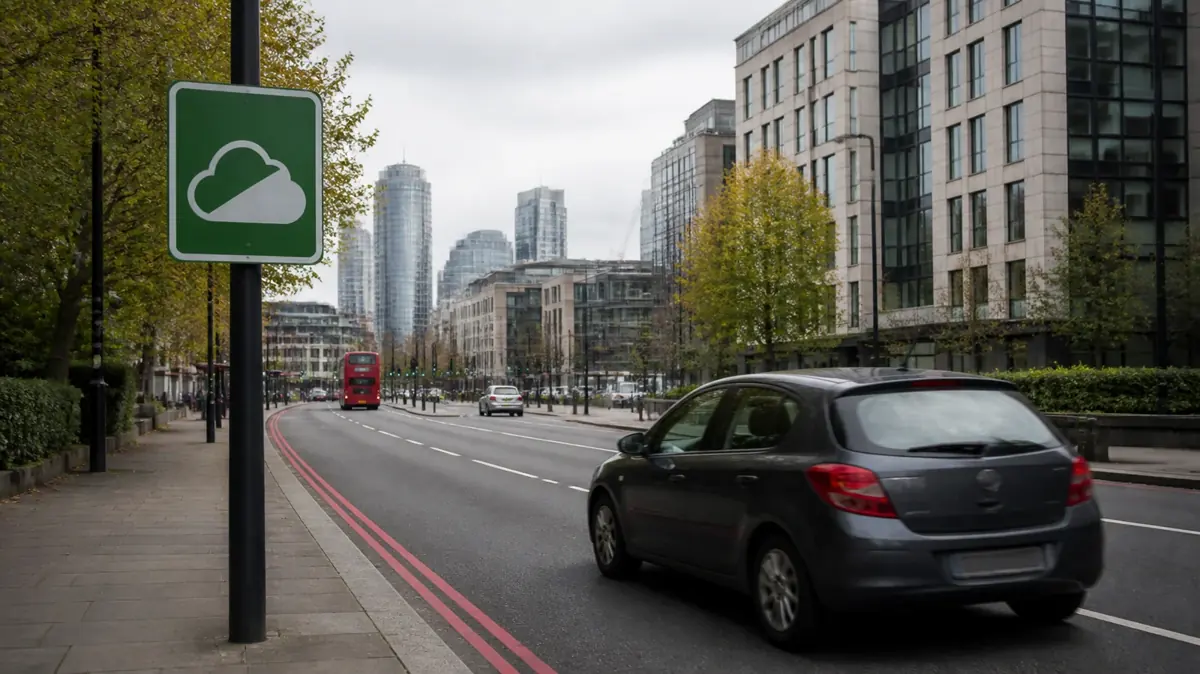
A car driving past a green low emission zone sign on a London street

People search for a congestion charge check expecting a single answer to “will I be charged in London?” The truth is that London has two separate daily charges, and a vehicle can be liable for one, both or neither. The Congestion Charge applies to driving in the charging zone in central London at set times. The Ultra Low Emission Zone (ULEZ) charge depends on the vehicle’s emissions standard and covers a much larger area. The checker above looks at the second one: enter a registration and MOT Check Now gives an estimate of whether the vehicle meets the ULEZ standard, based on its fuel type and Euro status. This page explains how the two charges differ, so you know what to check before you drive.

We do not state the Congestion Charge amount, its operating hours or any penalty amounts on this page. Those figures are set by Transport for London (TfL), they can change, and we have not verified a current figure for this page. Read them on TfL’s Congestion Charge page before you travel. We do state the ULEZ details that TfL publishes, because that is the scheme our checker estimates.

Quick answers

  • Is there one London charge? No. There are two separate ones: the Congestion Charge and the ULEZ charge.
  • Can both apply on the same day? Yes. TfL states that vehicles that do not meet the ULEZ standard must pay the ULEZ charge in addition to the Congestion Charge.
  • Can a ULEZ-compliant car still owe the Congestion Charge? Yes. Compliance with ULEZ does not switch off the Congestion Charge.
  • ULEZ charge: £12.50 per day for non-compliant, non-exempt vehicles, 24 hours a day, 7 days a week, except Christmas Day, across all London boroughs.
  • Congestion Charge amount and hours: set by TfL and subject to change. Read them on the TfL site.
  • What does this checker do? It estimates ULEZ compliance only. It does not calculate the Congestion Charge.
01

Key facts at a glance

Question Short answer
Who runs both charges? Transport for London (TfL)
Where does the Congestion Charge apply? The central London charging zone, shown on TfL’s map
Where does ULEZ apply? All London boroughs, not including the M25
ULEZ daily charge £12.50 for non-compliant, non-exempt vehicles
ULEZ hours 24 hours a day, 7 days a week, except Christmas Day
Congestion Charge amount and hours Check TfL, as they can change
Does ULEZ compliance remove the Congestion Charge? No
Penalty amounts Check TfL, not stated here
Non-UK-registered vehicles Must register with EPC plc for ULEZ
What our checker covers An estimate of ULEZ compliance only
02

What the Congestion Charge is

The Congestion Charge is a daily charge for driving within a defined charging zone in central London during its operating hours. It exists to reduce traffic in the busiest part of the capital, and it applies whatever the vehicle’s age or fuel unless a discount or exemption applies. The key points for a driver are where the zone is, when it operates, how much it costs, who is exempt or eligible for a discount, and how and when to pay.

All of those details are set by TfL and can change, which is why we do not print an amount or hours here. Go to TfL’s Congestion Charge page for the current amount, the operating times, the zone boundary and the discounts and exemptions. We do not hold a map of the zone, so use TfL’s own map to see whether your route crosses it.

A point that surprises people is that the Congestion Charge has nothing to do with how clean the vehicle is. It is a charge for driving in the zone at charging times, so a modern car pays the same as an older one unless a discount or exemption applies. Any emissions-related discounts or exemptions are TfL’s to describe and can change, so read them on the TfL site rather than relying on what you remember.

03

What the ULEZ charge is

The Ultra Low Emission Zone charge is £12.50 per day for vehicles that do not meet the emission standard and are not exempt. It runs 24 hours a day, 7 days a week, every day except Christmas Day (25 December). The zone covers all London boroughs and does not include the M25. Fully electric vehicles are not charged. Lorries, vans and specialist heavy vehicles over 3.5 tonnes, and buses and coaches over 5 tonnes, do not pay ULEZ, although they may be subject to the Low Emission Zone instead.

The standards are widely published and TfL links to them: petrol cars and vans generally need Euro 4 (broadly registered from 2005 or 2006), diesel cars need Euro 6 (broadly from September 2015), and motorcycles need Euro 3 (broadly from 2007). The ULEZ checker page explains how our estimate is built, and TfL’s own checker is the final word.

ULEZ standard by vehicle type (£12.50 a day if not met) Petrol cars and vans Euro 4 broadly 2005 or 2006 on Diesel cars Euro 6 Sep 2015 on Motorcycles Euro 3 broadly 2007 on Fully electric Not charged any date Registration years are a guide. Confirm with TfL. The Congestion Charge is separate.
The ULEZ standard for each main vehicle type. This does not show the Congestion Charge, which is separate.
04

Congestion Charge versus ULEZ at a glance

Feature Congestion Charge ULEZ
What triggers it Driving in the charging zone during charging hours Driving a non-compliant vehicle anywhere in the zone
Depends on emissions? The charge itself is linked to driving in the zone. Check TfL for emission-related discounts and exemptions. Yes. Compliance depends on fuel type and Euro standard.
Daily amount Set by TfL, check before travel £12.50 for non-compliant vehicles
Hours Set by TfL, check before travel 24 hours a day, 7 days a week, except Christmas Day
Area Central London charging zone All London boroughs
Can both apply? Yes. TfL states that vehicles that do not meet the ULEZ standard must pay the ULEZ charge in addition.

Think of it as two questions. The first is where and when you are driving, which decides the Congestion Charge. The second is what you are driving, which decides ULEZ. A typical weekday commute into the centre in an older diesel car could raise both questions at once, while a Sunday drive in a newer petrol car across an outer borough may raise neither. Because the answers depend on the vehicle and the journey, check each one separately rather than assuming one covers the other.

The practical consequence is that a car can be fully ULEZ-compliant and still owe the Congestion Charge on a trip into the centre during charging hours. A non-compliant car doing the same trip can owe both. A journey outside the central zone, or outside Congestion Charge hours, can still attract the ULEZ charge alone if the vehicle is non-compliant.

Which London charge could apply? Outside central zone Central zone, charging hours ULEZ compliant Not compliant Neither charge unless an exception applies Congestion Charge only check TfL for amount and hours ULEZ only £12.50 a day Both charges ULEZ in addition to Congestion Charge
A simplified guide to which London charge could apply. Exemptions, discounts and exceptions exist, so confirm everything with TfL.
05

Worked examples

These are illustrations, not records of real vehicles or journeys. The final word on any real trip is TfL’s.

Example 1: a newer petrol car driving into the centre on a weekday

A petrol car that meets Euro 4 or better is likely to be ULEZ-compliant, so it would not owe the ULEZ charge. If the journey passes through the central charging zone during Congestion Charge hours, the Congestion Charge could still apply. The driver should check TfL for the current amount, the hours and whether any discount or exemption applies.

Example 2: an older diesel car in an outer borough on a Sunday

A diesel car registered before about September 2015 is unlikely to meet Euro 6. A trip that stays in an outer borough, outside the central zone, would not trigger the Congestion Charge, but the ULEZ charge of £12.50 could still apply because the zone covers all London boroughs and runs every day except Christmas Day.

Example 3: an older diesel car commuting into the centre

This is the case that can raise both charges: a non-compliant vehicle driven into the central zone during charging hours. TfL states that vehicles that do not meet the ULEZ standard must pay the ULEZ charge in addition to the Congestion Charge.

Example 4: a fully electric car

A fully electric vehicle is not charged for ULEZ. Whether it owes or is discounted for the Congestion Charge is a matter for TfL’s current rules, so check the TfL page and do not assume.

Example 5: an older motorcycle

Motorcycles need to meet Euro 3 for ULEZ, which broadly means registered from 2007. An older motorcycle may be charged for ULEZ. Whether it owes the Congestion Charge in the zone is again a TfL question.

06

How to check before you drive into London

  1. Check the vehicle’s ULEZ status. Enter the registration in the checker above. Note the fuel type, Euro status and our estimate.
  2. Confirm with TfL. Use TfL’s official vehicle checker before you travel. Our estimate is a fast read, not a final ruling.
  3. Look at your route and time. Check whether you will enter the Congestion Charge zone and whether it falls inside charging hours.
  4. Look up discounts and exemptions. TfL lists who qualifies for each charge. Do not assume a vehicle is exempt from either.
  5. Plan payment. Charges are paid to TfL, and the rules for when and how are on its website. Rely on TfL for the deadline, as we do not state payment terms here.

Penalty amounts for missed payments are not given on this page. Check TfL before you travel, and do not rely on a third-party site, including this one, for the exact penalty.

Journeys that cross the boundary

A route that clips the edge of the central zone can trigger the Congestion Charge even if most of the journey is elsewhere. Use TfL’s map to look at your actual route, including any diversion a satnav might suggest. Equally, a route that avoids the central zone entirely can still be inside the ULEZ because the ULEZ covers all London boroughs.

Visitors and foreign-registered vehicles

For ULEZ, vehicles not registered in the UK must be registered with EPC plc. Our checker works from UK DVLA records, so it will not return a result for a vehicle registered outside the UK. If you are bringing a vehicle in from abroad, read TfL’s guidance on both charges well before you travel.

Hire cars, borrowed cars and company cars

Charges attach to the vehicle’s registration. If you hire or borrow a car, find out before you drive whether the owner or hire firm handles charges and how they pass them on. For a company car, ask your fleet manager. Either way, you can check the ULEZ status of the registration with the checker above and with TfL.

07

Edge cases that change the answer

Hybrids

For ULEZ, a hybrid is judged on the Euro standard of its petrol or diesel engine. A plug-in hybrid that you run on battery is still assessed on its engine standard. Any Congestion Charge discount linked to a vehicle’s type is for TfL to describe, so check the TfL page.

Vehicles with no Euro status

Some older vehicles and some imports have no Euro status on the DVLA record. Our estimate then falls back on fuel type and registration year and is less certain. Use TfL’s checker to settle it.

Vans and heavy vehicles

Light vans up to 3.5 tonnes can be charged for ULEZ based on Euro standard and fuel type. Lorries, vans and specialist heavy vehicles over 3.5 tonnes and buses and coaches over 5 tonnes do not pay ULEZ, though the Low Emission Zone may apply. Whether they owe the Congestion Charge is a TfL question. See the van MOT check for the MOT record of a van.

Taxis and private hire vehicles

Licensed taxis and private hire vehicles have their own rules and treatment under TfL’s schemes. We do not state those rules here, so check TfL directly if you drive one.

Blue badge holders, residents and other discounts

TfL runs discounts and exemptions for particular groups. They change over time and have application processes of their own, so we do not list them as fact. If you think you qualify, apply through TfL and keep the confirmation.

08

What to do if a charge might apply to you

  1. Work out which charge, if either. Is the vehicle ULEZ-compliant? Will the route pass through the central zone during its operating hours?
  2. Read TfL’s current terms. The amount, hours, discounts and payment deadline are on the TfL site.
  3. Pay promptly if you have to drive in. Charges are paid to TfL. Keep the confirmation.
  4. Consider alternatives. Public transport, park and ride on the edge of the zone, or a different route might be cheaper than paying.
  5. If you receive a notice you think is wrong, follow the instructions on it and TfL’s process for representations. Keep your payment confirmation, your vehicle details and any evidence of the journey.
09

Why the two charges exist

The two schemes were designed for different problems. The Congestion Charge is a traffic-management tool: it puts a price on driving in the busiest part of the city so that fewer vehicles use it. ULEZ is an air-quality tool: it puts a price on driving the most polluting vehicles anywhere in a much larger area, so that drivers have a reason to switch to cleaner vehicles or other ways of travelling. Because the aims are different, the triggers are different, and one does not replace the other. When you see both mentioned in a news story or a forum thread, it helps to ask which problem the writer is talking about.

For a driver this has a useful consequence. If you want to reduce what you pay, the levers are different for each charge. For the Congestion Charge, the levers are mostly about whether, when and where you drive. For ULEZ, the levers are mostly about the vehicle: its fuel, its Euro standard, and whether it qualifies for an exemption or a retrofit. Keeping that distinction in mind stops you spending money fixing the wrong problem.

10

Understanding the Euro standards behind the ULEZ estimate

Euro emissions standards are a ladder of tailpipe limits that vehicles are approved against when new. Each step, from Euro 3 up through Euro 4 and Euro 5 to Euro 6, is stricter than the last, particularly for the nitrogen oxides and particulate matter that harm air quality in cities. ULEZ asks petrol cars and vans to reach Euro 4, diesel cars to reach Euro 6 and motorcycles to reach Euro 3. Diesel is held to a higher step because diesel engines were historically the bigger source of nitrogen oxides.

A vehicle does not meet a Euro standard because of its age. It meets it because it was approved against it. That is why two cars registered in the same year can have different results, and why a diesel that looks fairly new can still fall short. The Euro status on the DVLA record is the most direct evidence we have, and when it is present our estimate leans on it. When it is missing we use fuel type and registration year, and we flag the result as less certain.

Euro step Where it matters for ULEZ
Euro 3 The standard motorcycles need to meet
Euro 4 The standard petrol cars and vans need to meet
Euro 5 Meets the petrol requirement, but falls short of the diesel car requirement
Euro 6 The standard diesel cars need to meet, and above the petrol requirement
11

Which kind of London driver are you?

The right level of checking depends on how you use London roads. These profiles are generalisations, but they show where to focus.

The occasional visitor

If you drive in a few times a year, the sums are small, but the risk of forgetting is real. Check the vehicle with TfL before each trip, read the current Congestion Charge terms, and put the payment step in your plans, not as an afterthought. Many people are charged because they simply did not know the zone covered the whole of London.

The daily commuter

For a regular journey the costs add up, so the vehicle’s ULEZ status matters a great deal. Check it carefully, consider whether the central zone is actually on your route, and think about whether a different vehicle or a different mode would cost less over a year. Our ULEZ checker is a good place to start, and TfL gives the final answer.

The delivery or trade driver

Vans, tools and tight schedules mean you cannot easily change route. The weight of the van, its fuel and its Euro status decide the ULEZ position, and your hours decide the Congestion Charge position. Keep records of payments, because a business usually has to account for them.

The person buying a car for London

This is the person with the most to gain from checking before spending. Run the registration, look at the Euro status, and compare it with your journeys. Then look at the MOT record and the mileage analysis so you are not saving on charges while inheriting repair bills. The used car checklist is a good place to start, and the seller claim checker helps you compare what a seller says with what the official record shows. Ask the seller for the V5C and service history too, and walk away if the answers do not match the record. A car that is cheap because it is non-compliant can end up costing more than a compliant one, so factor your expected London days into the price you are willing to pay.

The visitor from abroad

Read TfL’s guidance on both charges before you leave home. Non-UK-registered vehicles must register with EPC plc for ULEZ, and our checker cannot assess them. Allow time to sort it out in advance.

12

Reading the DVLA record for London journeys

When you run a registration through the checker above, the record can include several fields that bear on London charges. Knowing what each one means makes the result easier to judge.

  • Fuel type. Petrol, diesel, electric and hybrid are treated differently. A hybrid is judged on its engine.
  • Euro status. The strongest single indicator of ULEZ compliance, where the record holds one.
  • Year of manufacture and month of first registration. Used for our fallback estimate when Euro status is missing.
  • Engine capacity and CO2 emissions. Useful background, though they do not decide ULEZ compliance.
  • Type approval and wheel plan. Help you check the record matches the vehicle you are looking at.
  • Revenue weight. A clue for vans near the 3.5 tonne boundary, though plated weight is what you should confirm.
  • Marked for export. A flag that the record may not match the vehicle’s current status.

We never show keeper or owner details, because the official data does not hold them. If the make, colour or fuel type on screen does not match the vehicle in front of you, stop and recheck the registration before relying on anything else.

13

A calm way to think about the cost

It is easy to react to a charge with alarm, so a simple framework helps. For ULEZ, the cost of a charged day is £12.50, and the number of charged days in a year depends on how often you drive in the zone. For the Congestion Charge, read the current amount on the TfL site and count the days you expect to enter the central zone during charging hours. Add the two together for the days when both apply. Then compare the total with the cost of the alternatives: paying occasionally, using public transport for the central leg, changing vehicle, or retrofitting where that is available.

Some questions to ask before you decide:

  • How many days a year will I really drive in the central zone, and how many in the rest of London?
  • Is my vehicle compliant, and is the Euro status on the record reliable?
  • Would a different vehicle bring other costs, such as higher tax, insurance or servicing?
  • Could I avoid the central zone with a different route or a park and ride?
  • Do I qualify for any discount or exemption that TfL lists today?

We cannot make the decision for you, and we do not give financial advice, but the list above keeps the decision grounded in your own numbers rather than in headlines.

14

Keeping records

Whatever you decide, keep a simple record. Save the confirmation of every payment, note the date, the registration and the amount, and keep a copy of any exemption or discount approval. If a notice later arrives that you believe is wrong, those records are your evidence. It also helps to screenshot the result of an official check on the day you travel, because charges, zones and rules can change over time and you may want to show what was true at the time.

15

Other zones outside London

The Congestion Charge is a London scheme and has no counterpart in most UK cities. Other cities use clean air zones, which charge according to emissions, and Scotland has low emission zones in Glasgow, Edinburgh, Aberdeen and Dundee. Private cars are currently charged in a clean air zone only in Birmingham and Bristol. Zones and charges change, so check the official council page before you travel. The clean air zone checker covers cities outside London.

16

Common mistakes

  • Thinking one charge covers both. Paying one does not pay the other.
  • Assuming a compliant car is charge-free in the centre. A ULEZ-compliant car can still owe the Congestion Charge.
  • Assuming the Congestion Charge is emissions-based. It is linked to driving in the zone, whatever the vehicle.
  • Quoting a charge from memory. Amounts and hours change, so read the current figure on the TfL site.
  • Assuming evenings and weekends are free of ULEZ. ULEZ runs 24 hours a day, 7 days a week, except Christmas Day.
  • Forgetting the ULEZ covers all boroughs. It is much bigger than the central charging zone.
  • Treating our estimate as an official ruling. It is not. TfL’s checker is the authority.
  • Using a foreign plate without registering. Non-UK vehicles must register with EPC plc for ULEZ.
17

Other checks for the same vehicle

A vehicle that is not compliant is often an older one, and older vehicles bring other questions. Check the MOT status, the tax status and the MOT history for recurring faults. If you are buying a used car specifically to drive in London, the Full Vehicle Report (£3.99) brings the test timeline, mileage analysis and DVLA details into one PDF, and the vehicle check shows the basic record for free. It does not include finance, stolen or write-off data. The guides section has more background, including the used car checklist.

Weighing up a London-ready car against alternatives? Our compare cars tool puts candidate vehicles side by side, and the mileage check shows our analysis of recorded MOT odometer readings, which is an indicator rather than proof.

18

A short checklist before you set off

  • I have run the registration through the checker above and through TfL’s official checker.
  • I know whether my route enters the central charging zone, and I have read the current Congestion Charge amount and hours on the TfL site.
  • I know the ULEZ charge is £12.50 per day if the vehicle is not compliant and not exempt, 24 hours a day, every day except Christmas Day.
  • I know how and when to pay through TfL and I will keep the confirmation.
  • I have checked whether any discount or exemption applies to me, and I have the approval in writing.
  • I have a back-up plan, such as public transport or a different route, if the cost does not make sense.
19

Where to look for official answers

When money is involved, go to the source. TfL publishes the current Congestion Charge terms and the ULEZ rules, and runs the vehicle checkers and payment services for both. If a website, including this one, disagrees with TfL, TfL is right. The ULEZ page on TfL and the Congestion Charge page are the places to confirm amounts, hours, boundaries, exemptions and payment deadlines. Bookmark them, and check them again before each trip rather than relying on a note you made last year.

20

Glossary

Congestion Charge
A daily charge for driving in the central London charging zone at set times, run by TfL.
ULEZ
The Ultra Low Emission Zone. A daily charge of £12.50 applies to vehicles that do not meet the emission standard and are not exempt.
LEZ
Low Emission Zone. In London, relevant to some heavy vehicles.
TfL
Transport for London, which runs both charges.
Euro standard
A tailpipe emissions standard a vehicle is approved against. Higher numbers are stricter.
EPC plc
The organisation named by TfL for registering non-UK vehicles for ULEZ.
Plated weight
The maximum weight a vehicle is rated for, which decides whether the over 3.5 tonne rules apply.
PCN
Penalty charge notice, the notice issued if a charge is not paid. Amounts are on the TfL site.

Limits of this check

Our tool estimates ULEZ compliance from DVLA data. It does not calculate the Congestion Charge, show the zone map, apply discounts or confirm exemptions, and it is not an official TfL service. If a DVLA record is missing a Euro status, the estimate is weaker, and TfL’s checker should settle the question. Read how we get our data, our editorial policy and about us for how this site works, and contact us if something looks wrong.

We are independent and not affiliated with TfL, the DVLA, the DVSA or GOV.UK. Registration numbers entered are processed to fetch the vehicle record. Contains public sector information licensed under the Open Government Licence v3.0.

Full Vehicle Report (PDF)

Complete MOT timeline, mileage analysis, recurring advisories and a plain-English summary in one downloadable document.

Frequently asked questions

Is there a congestion charge check by number plate?

TfL provides an official vehicle checker and payment service for the Congestion Charge. The checker on this page estimates ULEZ compliance from the DVLA record. Use it for a quick read and then confirm the charges you owe with TfL.

How much is the Congestion Charge?

The amount and hours are set by TfL and can change, so we do not state them here. Check TfL's Congestion Charge page for the current figure, the operating times and the zone map before you travel.

What is the difference between the Congestion Charge and ULEZ?

The Congestion Charge applies to driving in the central charging zone during set hours. ULEZ is u00a312.50 a day for vehicles that fail the emission standard and covers all London boroughs at all hours. They are separate charges, and a vehicle can owe one, both or neither.

Can I pay both the Congestion Charge and ULEZ on the same day?

Yes. TfL states that vehicles that do not meet ULEZ standards must pay the ULEZ charge in addition to the Congestion Charge. A compliant car can still owe the Congestion Charge.

Does ULEZ run on weekends?

Yes. ULEZ operates 24 hours a day, 7 days a week, every day except Christmas Day. The Congestion Charge has its own hours, which TfL sets separately.

Which vehicles meet the ULEZ standard?

Broadly, petrol cars and vans need Euro 4, diesel cars need Euro 6 and motorcycles need Euro 3. Fully electric vehicles are not charged. The exact standard is on the TfL site, and its checker is the authority.

Do vans pay ULEZ?

Vans up to 3.5 tonnes can. Lorries, vans and specialist heavy vehicles over 3.5 tonnes and buses and coaches over 5 tonnes do not pay ULEZ, although they may be liable under the Low Emission Zone.

Does the ULEZ result on this site replace TfL's checker?

No. Our result is an estimate from fuel type, Euro status and registration year. TfL's checker is the official answer, so confirm there before you drive into the zone.

If my car is ULEZ-compliant, do I still pay the Congestion Charge?

It can still apply. Compliance with ULEZ does not remove the Congestion Charge for driving in the central zone during charging hours, unless TfL gives a discount or exemption. Check TfL.

Does the Congestion Charge depend on how clean my car is?

The charge is linked to driving in the central zone at set times, not to the vehicle's Euro standard. TfL lists any discounts or exemptions, including emissions-related ones, so read its current rules.

Is the ULEZ the same size as the Congestion Charge zone?

No. The Congestion Charge zone is a central area, while ULEZ covers all London boroughs, not including the M25.

Can I check a foreign-registered vehicle?

Our checker works from UK DVLA records, so it cannot assess non-UK plates. For ULEZ, non-UK-registered vehicles must register with EPC plc. Read TfL's guidance on both charges before you travel.

How much is the penalty if I do not pay?

We do not state penalty amounts because they are set by TfL and can change. Check the TfL site for the current figure and the payment deadline, and do not rely on a third-party page.

Are there similar charges outside London?

Other cities use clean air zones, and Scotland has Low Emission Zones. Private cars are currently charged in a clean air zone only in Birmingham and Bristol. Check the official council page before you travel.

Need it all in one document?

The Full Vehicle Report gives you the complete MOT timeline, mileage analysis and summary as a PDF you can keep.

Get the report £3.99