Free UK MOT, tax and vehicle checksOfficial DVSA & DVLA dataNo sign-up · UK vehicles only

Check Any Car's MOT Before You Drive, Buy or Book

Enter a registration to see if the MOT is valid, the expiry date and how many days are left. Free, instant and based on official DVSA data.

Free. No sign-up. We never show owner details.

Demo mode: results are sample data. Try AB12CDE, CLOCK1, DIESEL1, EV21, EXPIRED1 or NEWCAR.

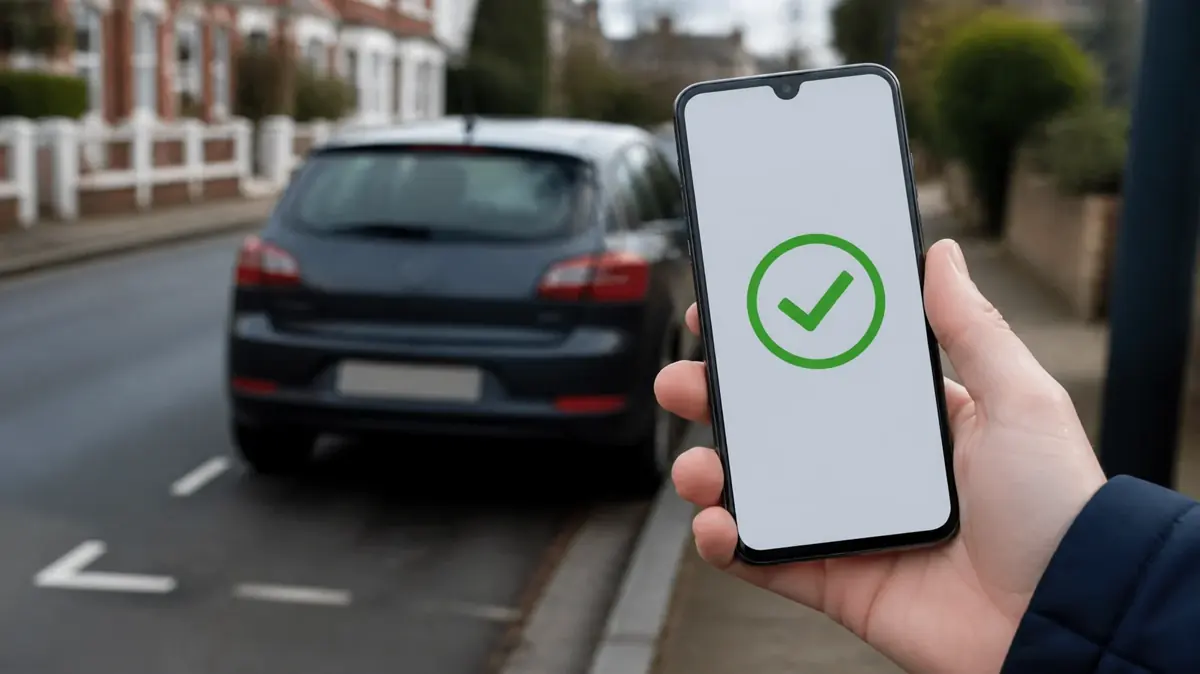
Person checking a car's MOT status on a smartphone beside a parked car

A car MOT check answers three practical questions in a few seconds: does this car have a valid MOT today, when does it run out, and how long do you have to sort the next test? Enter the registration in the checker above and MOT Check Now reads the MOT status and expiry date held by the DVLA, then shows the days remaining. This page is written for ordinary cars, the type most people mean when they search for a car MOT check, and it focuses on what to do with the answer. If you want the list of every past test, go to the MOT history page instead.

Quick answers

  • What does the car MOT check show? Whether the MOT is valid, the expiry date and days left, plus basic details to confirm the car.
  • Maximum cost? £54.85 for a car with up to eight passenger seats. No VAT. Garages may charge less.
  • First MOT? By the third anniversary of registration, then yearly.
  • Earliest test that keeps my date? One month minus one day before expiry.
  • How long does it take? Roughly 45 to 60 minutes.
  • Drive with no MOT? Fine of up to £1,000, except to a pre-arranged test or to or from a repair.
01

Key facts at a glance

Item Car rule or fact
First MOT due By the third anniversary of registration
After that Every 12 months
Window to keep renewal date From one month minus one day before expiry
Maximum fee £54.85 (up to eight passenger seats), no VAT charged
Test time Roughly 45 to 60 minutes
Free partial retest Car left at the centre for repair and retested within 10 working days
Free retest for listed items Return to the same centre by the end of the next working day
Fine, no valid MOT Up to £1,000
Fine, dangerous defect Up to £2,500, a driving ban and 3 penalty points
Appeal window Complaint form within 14 working days for a failed vehicle
02

How to run a car MOT check

  1. Find the registration. It is on both number plates and on the V5C logbook. If you are checking a car you do not own yet, ask the seller to send a photo of the plate rather than typing it from an advert.
  2. Enter it in the box above. Spaces and capital letters do not matter.
  3. Match the vehicle. The make, colour and fuel type shown should agree with the car in front of you. A mismatch usually means a typing slip, but on a used car it deserves a direct question to the seller.
  4. Read the status, then the date. The status tells you whether the car is covered today. The expiry date and days remaining tell you how soon you need to act.

The status and expiry date come from the DVLA Vehicle Enquiry Service, so they match the official record. This site is independent and has no connection to the DVLA or DVSA. For the official service, see GOV.UK.

03

What a car owner should do with each result

The checker can return Valid, Not valid, No details held by DVLA or No results returned. Here is how to act on each one for a standard car.

Result Meaning for a car Next step
Valid A current certificate is on record. Note the expiry date and work out your early-test window.
Not valid There is no current MOT on record. Book a test. Drive only to the test or to a repair.
No details held by DVLA No MOT record exists for this registration. Recheck the reg. A car under three years old has usually not had its first test.
No results returned The lookup did not return a record. Retype the registration and try again.

A Valid result for a used car is a starting point. The certificate describes the car on the day it was tested, so the advisories and any previous failures matter just as much. The guide to reading MOT history shows how to spot a pattern such as the same corroded part appearing year after year.

04

When is a car’s MOT due?

A new car needs its first MOT by the third anniversary of its registration, and then every 12 months. The first MOT guide covers the date in detail. Most owners then settle into a yearly cycle, and the cycle only shifts if the car is tested too early or the MOT is allowed to lapse.

Testing early without losing time

You can take a car for its MOT up to one month minus one day before the current certificate expires and keep the same renewal date. If the MOT expires on 15 May, the earliest test that keeps the date is 16 April, and the new certificate then runs to 15 May the following year. Test any earlier and the new certificate runs for one year minus a day from the date you pass, so you give up the unused part of the old one.

Testing late

Once the MOT has expired the car cannot legally be driven on the road, except to a pre-arranged MOT test or to or from a place where repairs are being carried out. Driving without a valid MOT can lead to a fine of up to £1,000. A pass after expiry starts a new certificate from the date of the test, so your yearly date moves.

Check the days remaining figure about six weeks before expiry. That leaves time to book a slot inside your early-test window and still have a couple of weeks spare if the car needs repairs.

05

What a car MOT can cost

The maximum fee for a car with up to eight passenger seats is £54.85, and no VAT is charged on top. Garages may charge less, and many do, so it is worth ringing two or three before you book. Any repair work is separate and is not covered by the cap. For other vehicle types and a fuller breakdown, see MOT cost.

A standard car test takes roughly 45 to 60 minutes. If the car fails, the retest rules are:

  • Free partial retest: the car is left at the test centre for repair and retested within 10 working days.
  • Free retest: the car returns to the same centre by the end of the next working day for a limited list of items, such as lights, mirrors, doors, seatbelts and wipers.
  • Reduced partial-retest fee: the car is taken away for repair and returns within 10 working days.
  • Full fee: any other case.
06

What happens if the car fails

You can drive a failed car away only if its current MOT is still valid and the test listed no dangerous defect. A dangerous defect means the car must not be driven at all. Driving a vehicle with a dangerous defect can bring a fine of up to £2,500, a driving ban and 3 penalty points, whether or not an MOT is current. Defects are sorted into dangerous, major, minor and advisory, and the common MOT failure reasons page explains which faults tend to land in which group. If you disagree with a failure, you can appeal to DVSA, and for a failed vehicle the complaint form must be sent within 14 working days.

07

What the MOT checks on a car

The test is a visual and functional inspection of the parts that affect safety and emissions. The garage does not take the car apart. The tester uses a ramp or pit and instruments to look at the main systems. For a standard car, the test covers lights, brakes, steering, suspension, tyres and wheels, seatbelts, the condition of the body and structure, mirrors, windscreen and wipers, the horn, number plates, the vehicle identification number and the exhaust emissions. Full detail is in the MOT test checklist, and the MOT test classes guide explains how the test differs between vehicle types.

What the MOT checks Grid of twelve areas checked in a car MOT: lights, brakes, steering and suspension, tyres and wheels, seatbelts, exhaust and emissions, body and structure, windscreen and wipers, horn, registration plates, mirrors and vehicle identification number. What the MOT checks Main areas inspected on a carLightsBrakesSteering &suspensionTyres &wheelsSeatbeltsExhaust &emissionsBody &structureWindscreen& wipersHornRegistrationplatesMirrorsVehicle IDnumber (VIN)Based on the GOV.UK list of car parts checked at an MOT.Source: GOV.UK
What the MOT test checks

It does not cover everything a motorist cares about. The engine, clutch and gearbox are not examined in detail, the test is not a service, and it does not tell you whether the car has been maintained well. That is why advisories matter: they are the tester’s observations about parts that are still passing but wearing out.

08

Worked examples for car owners

Example 1: the routine renewal

You check on 20 March and see the MOT is valid, expiring on 15 May, with 56 days left. The earliest test that keeps your date is 16 April. You book for 22 April, three weeks before the expiry. The car passes with one advisory for a tyre. The new certificate runs to 15 May the following year, and you have a tyre to replace before next time.

Example 2: the early tester who loses time

A driver with an expiry of 15 May decides to get the test done in early March because there is a cancellation. The car passes on 5 March. Because that was earlier than 16 April, the new certificate runs for one year minus a day from 5 March, so it ends on 4 March the following year. Roughly ten weeks of cover are gone for no benefit.

Example 3: the failure close to expiry

A car with five days left fails on a worn brake pipe, listed as a major defect. The old MOT is still valid and nothing was marked dangerous, so the owner may drive away, but only until the old certificate ends. If the owner leaves the car at the centre for repair and it is retested within 10 working days, the partial retest is free. Had the defect been marked dangerous, the car could not have been driven at all.

Example 4: the used car buyer

A buyer checks the registration from an advert. The check shows Valid, with 11 days left. The seller said there were months left. This is a concrete point to raise: the buyer will face a test fee almost immediately, and any failures will be theirs to fix. The buyer asks for the price to reflect it.

09

Cost at a glance

The cap for a car is highlighted below against other vehicle types. The cap is the most a test centre can charge for the test itself, and the figures come from GOV.UK.

Car (up to 8 seats)£54.85Motorcycle (no sidecar)£29.65Motorcycle with sidecar£37.803-wheeler up to 450kg£37.809 to 12 seat passenger£57.30Goods up to 3,000kg£54.85Goods 3,000 to 3,500kg£58.60
Maximum MOT fees by vehicle type, with the car fee highlighted. Source: GOV.UK MOT test fee page.

Some people see a very low advertised price and wonder if it is real. Garages may charge less than the maximum and many do. Ask what is included, whether a retest is free and what the garage does if the car needs repairs. A low test price does not make repairs cheaper, because repair work is charged separately. The MOT near me guide helps you pick a centre, and the cancel or rebook guide explains what to do if plans change.

10

Car-specific situations

New cars

A car registered less than three years ago does not yet need an MOT. The checker will usually say No details held by DVLA, and the days remaining figure will be blank. Nothing is wrong. Put a reminder in the diary for the third anniversary of the registration date.

Electric and hybrid cars

Electric and hybrid cars need an MOT in the same way as any other car, on the same schedule. The tester checks the same safety items such as brakes, steering, suspension, tyres and lights. An electric car has no exhaust to test. The exemption that exists for some electric vehicles applies to electric goods vehicles registered before 1 March 2015, not to ordinary cars.

Older and classic cars

A car built or first registered more than 40 years ago, without substantial changes such as replacing the chassis, body, axles or engine in a way that alters how it works, can be exempt from the MOT. Exempt vehicles must still be roadworthy. This is not the same as the vehicle tax exemption, which uses a different date (built before 1 January 1986, or first registered before 8 January 1986 where the build date is unknown). The exempt vehicles guide goes through both.

Northern Ireland cars

Northern Ireland MOTs are run by DVA. A car registered or tested there will not show NI test records in the DVSA history. See the Northern Ireland MOT guide.

Imported cars

A car imported from abroad has no UK MOT record until it is tested here. Compare the make, colour and dates with the V5C. For the exact point at which a particular import needs its first UK test, GOV.UK is the authority.

Cars with personalised plates

Private plates work exactly like standard ones in the checker. If a plate has been transferred, the record under that number can look unfamiliar, so check that the make, colour and fuel type match the car you are looking at. Ask to see the V5C. The number plate guide explains legal plate formats.

Cars that have been off the road

A car declared SORN and kept off the road does not need a valid MOT while it stays off the road. Before it goes back on the road it needs tax and an MOT, except for driving to a pre-arranged test. Use the SORN check to see the declared status.
11

Get the car ready

Many failures are caused by small, avoidable faults. Spend ten minutes on these checks before the test.

  1. Lights. Check headlights, sidelights, brake lights, indicators, fog lights and the number plate lamp. Ask a friend to watch while you press the brake.
  2. Tyres. Look for cuts, bulges and low tread. The tyre guide explains how to check depth.
  3. Wipers and washers. Replace worn blades and top up the washer fluid.
  4. Horn and mirrors. Make sure the horn works and mirrors are secure and not cracked.
  5. Number plates. They should be clean, legible and correctly spaced.
  6. Warning lights. Any warning light that stays on after starting is worth investigating first.
  7. Seatbelts. Check they latch and retract.

The full routine is in how to prepare for an MOT. If the car does fail, the failure reasons page will help you understand why, and what to do after a failed MOT sets out your options.

12

What the car MOT check shows and what it cannot

It shows It cannot show
MOT status, expiry date and days remaining The car’s mechanical condition today
Vehicle details to confirm it is the right car The previous keepers
A route to the full test history Insurance cover
Tax and SORN position through linked checks Finance, stolen or write-off status
13

What to do next

14

Checks to run alongside the MOT

An MOT is only one part of whether a car is legal and worth buying. These checks use the same registration:

  • Car tax check: tax status and due date. Tax does not transfer to a new keeper, so a buyer must tax the car before driving it away.
  • SORN check: whether the car has been declared off the road.
  • Mileage check: compares the odometer readings recorded at each MOT and flags falls, large jumps and long stalls. It is an indicator, not proof of clocking.
  • ULEZ checker: an estimate of whether the car meets the London standard.
  • Vehicle check: the basic vehicle record in one place.
15

Using the check when you buy a used car

The car MOT check is most valuable before you spend money. Here is a sensible order for a private purchase.

  1. Before you travel. Ask for the registration and run the check. Confirm the make, colour and fuel type match the advert. If the MOT is not valid or has only days left, factor in the cost and risk.
  2. Read the history. Open the MOT history and look at advisories, failures and gaps.
  3. Check the mileage. Run the mileage check and compare the odometer readings with the figure on the dashboard.
  4. Check tax and SORN. Tax does not transfer to a new keeper, so you must tax the car before you drive it away. The car tax check shows the current position.
  5. Inspect the car. Walk round it in daylight, look underneath where you safely can, and follow the used car checklist.
  6. Check the paperwork. The V5C should show the seller’s details and match the car. Never buy a car where the seller will not show it.
  7. Test drive and decide. Listen for noises, check the brakes and steering, and make sure all the dashboard warning lights behave.

Remember what the check cannot tell you. It does not cover finance, stolen status or write-off history, and nothing on this site claims to. If those matter to you, arrange that check separately before paying. The vehicle check shows the basic vehicle record and the seller claim checker helps you test what you were told.

16

Using the check when you sell a car

Sellers sometimes overlook the check, yet buyers will run it. If your MOT has only a few days left, you may get a better price by testing first, since a fresh certificate removes a worry. If the car has a recent failure in its history, be ready to show the repair invoice. Quote the expiry date in your advert exactly as it appears in the record, because a mismatch makes buyers suspicious. If your car has had advisories that you have since dealt with, say so.

17

Common reasons cars fail

Our common MOT failure reasons guide explains the main causes of failure in plain English. These are the areas that tend to cause trouble for ordinary cars, listed without a statistic attached.

  • Lights and indicators. A blown bulb is simple to fix but fails the test.
  • Tyres. Worn below the legal tread depth, damaged sidewalls or the wrong type fitted.
  • Brakes. Worn pads or discs, corroded pipes, or a poor brake balance.
  • Suspension and steering. Worn bushes, joints or springs.
  • Visibility. Cracks in the driver’s view of the windscreen and worn wipers.
  • Emissions. A car that fails the exhaust emissions limits for its fuel type.
  • Corrosion. Rust in structural areas close to safety-critical parts.

We do not publish pass rates here because we only use figures we can verify. The best indicator for a particular car is its own record.

18

Using a car on the road without a valid MOT can lead to a fine of up to £1,000. There are two exceptions: driving to a pre-arranged MOT test, and driving to or from a place where repairs are being carried out because the car failed. If the test lists a dangerous defect, the car must never be driven on the road, whether or not an MOT is current. Driving a vehicle with a dangerous defect can lead to a fine of up to £2,500, a driving ban and 3 penalty points. The driving without an MOT guide gives the full explanation, and the defect categories guide explains how defects are classed.

Driving without an MOT Decision flow: if the vehicle has a valid MOT you can drive it; if not, you can only drive to a pre-booked MOT test or to or from a repair, otherwise a fine of up to 1,000 pounds applies. A dangerous defect means a fine up to 2,500 pounds, a driving ban and 3 penalty points. Driving without an MOT Can you drive it? Follow the flowDoes the vehicle have a valid MOT?YESNOYou can drive itKeep it roadworthy. A dangerousdefect still makes it illegal.Only two exceptionsTo a pre-booked MOT test,or to/from a repair.Anywhere elseFine up to £1,000Dangerous defect listed? Never drive it.Illegal on the road, MOT or not. Fine up to £2,500,a driving ban and 3 penalty points.Source: GOV.UK
What happens if you drive without a valid MOT

An MOT is separate from tax and insurance. A vehicle that needs insurance must have it unless it has been declared SORN. The registered keeper of an uninsured vehicle that is not on SORN can face a £100 fixed penalty, a court fine of up to £1,000 and the vehicle can be clamped, taken away or destroyed. These are different rules from the MOT, which is why the checks on this site are separate.

19

Questions to ask a garage before you book

Not every test centre works the same way, and a few questions save money and stress. The caps in this guide set the most a centre can charge, but what you pay in practice depends on what the garage offers.

  • What is the test price? It cannot exceed £54.85 for a car, and it may be lower.
  • What is the retest policy? Ask whether a retest is free if you leave the car for repair, and how many working days you have.
  • Do you do repairs, and how are they priced? Repair work is outside the cap, so ask for a quote before agreeing to work.
  • How long will the car be with you? The test takes roughly 45 to 60 minutes, but some garages ask you to leave the car for longer.
  • What is your earliest slot inside my window? Remember your window starts one month minus one day before expiry.
  • What is your cancellation policy? The cancel or rebook guide sets out what to look for.

You should not feel pressured to agree to repairs on the day. If a garage lists failures, you can get a second opinion or repair the items elsewhere, as long as you stay within the retest rules. If you disagree with the result itself, the appeal route to DVSA is available, and the complaint form for a failed vehicle must be sent within 14 working days.

20

Common mistakes car owners make

  • Waiting until the last day. A failure with no time to retest leaves you without a legal car.
  • Testing too early. You give away part of the year you have already earned.
  • Ignoring advisories. They are the repair list for next year.
  • Treating a valid MOT as a warranty. It is not one.
  • Mixing up tax and MOT dates. They are separate. Check both.
  • Believing a verbal MOT claim. Check the record before you buy.
  • Assuming a no-details result is an error. A young or exempt car can legitimately show it.

Limits of a car MOT check

The status is only as current as the DVLA record. A test completed very recently may take a short time to appear, so check again before assuming the worst. The result says nothing about insurance, outstanding finance or whether the car has been written off, because that data is not available from the free official sources. The MOT is also a minimum roadworthiness check on one day, not a service or a guarantee of mechanical health.

If you would like the full timeline, mileage chart and recurring advisories saved as a PDF, the Full Vehicle Report costs £3.99. To stop having to remember the date at all, set up an MOT reminder.

Contains public sector information licensed under the Open Government Licence v3.0.

Full Vehicle Report (PDF)

Complete MOT timeline, mileage analysis, recurring advisories and a plain-English summary in one downloadable document.

22

Where the rules on this page come from

The rules, fees and penalties quoted here are taken from GOV.UK and the DVSA, not from opinion. The status and expiry date shown by the checker come from the DVLA Vehicle Enquiry Service, and the test history comes from the DVSA MOT history service. MOT Check Now is independent and has no affiliation with either agency. If a rule changes, the official page is the one to rely on, so use it to confirm anything that affects a decision. You can read how we handle data on our data page and how we write and correct content in the editorial policy, and you can tell us about an error through the contact page.

23

Glossary

  • MOT. The yearly roadworthiness and emissions test for most cars over three years old.
  • Expiry date. The last day of the current certificate.
  • Advisory. A part that passes now but is expected to become defective soon.
  • Major defect. A fault that causes a fail.
  • Dangerous defect. A fault so serious that the car must not be driven on the road.
  • PRS. Pass after rectification.
  • V5C. The vehicle registration certificate or logbook.
  • SORN. A declaration that a vehicle is off the road.

To learn who we are, see the about page. To understand where the data comes from, see how we get our data.

Frequently asked questions

How do I do a car MOT check?

Enter the registration number in the checker on this page. It shows whether the MOT is valid, the expiry date and the days remaining, using the DVLA Vehicle Enquiry Service. It is free and does not need an account.

How much does a car MOT cost?

The maximum fee for a car with up to eight passenger seats is u00a354.85, with no VAT added. Garages may charge less. Repairs are not part of the cap, so any work the car needs is paid for separately.

When is the first MOT due on a new car?

The first MOT is due by the third anniversary of the car's registration, then every 12 months. Until that first test is done there is no expiry date to show, so a new car can return No details held by DVLA.

How early can I get a car MOT and keep my renewal date?

You can test up to one month minus one day before the current certificate expires and keep the same renewal date. If it expires on 15 May, the earliest test is 16 April. Testing earlier makes the new certificate run for one year minus a day from the pass date.

Can I drive my car if the MOT has expired?

Only to a pre-arranged MOT test or to or from a place where repairs are being carried out. Driving without a valid MOT can result in a fine of up to u00a31,000. Insurance can also be affected, so check your policy wording.

What if my car fails and the old MOT is still valid?

You may drive it away only if the old MOT is still valid and the test listed no dangerous defect. If a dangerous defect was listed, the car must not be driven. Driving with a dangerous defect can bring a fine of up to u00a32,500, a ban and 3 penalty points.

Is a free retest available after a failure?

Yes, in two cases. If the car stays at the test centre for repair and is retested within 10 working days, the partial retest is free. If it returns to the same centre by the end of the next working day for a limited list of items such as lights, mirrors, doors, seatbelts and wipers, that retest is also free.

Does a valid MOT mean a used car is safe to buy?

No. A valid MOT shows the car met the minimum standard on the day it was tested. Read the advisories and past failures in the history, check the mileage readings, and inspect and test drive the car before you commit.

Do electric cars need an MOT?

Yes. Electric and hybrid cars need an MOT on the same schedule as other cars. The exemption for electric vehicles applies to electric goods vehicles registered before 1 March 2015, not to ordinary electric cars.

Can I use the car MOT check for a car I do not own?

Yes. The check is based on the registration number and shows the vehicle, not the person. No owner details are shown, so you can use it on a car you are thinking of buying.

How long does a car MOT test take?

Roughly 45 to 60 minutes. Allow extra time for the paperwork and, if the car fails, a discussion about repairs and retests.

Is a car MOT needed if the car is on SORN?

Not while it stays off the road. Before it is used on the road again, it needs tax and a valid MOT, apart from driving to a pre-arranged test.

Need it all in one document?

The Full Vehicle Report gives you the complete MOT timeline, mileage analysis and summary as a PDF you can keep.

Get the report £3.99