Free UK MOT, tax and vehicle checksOfficial DVSA & DVLA dataNo sign-up · UK vehicles only

Bike MOT Check: Find Out If Your Motorcycle Is Legal to Ride

Enter a registration to see if the MOT is valid, the expiry date and how many days are left. Free, instant and based on official DVSA data.

Free. No sign-up. We never show owner details.

Demo mode: results are sample data. Try AB12CDE, CLOCK1, DIESEL1, EV21, EXPIRED1 or NEWCAR.

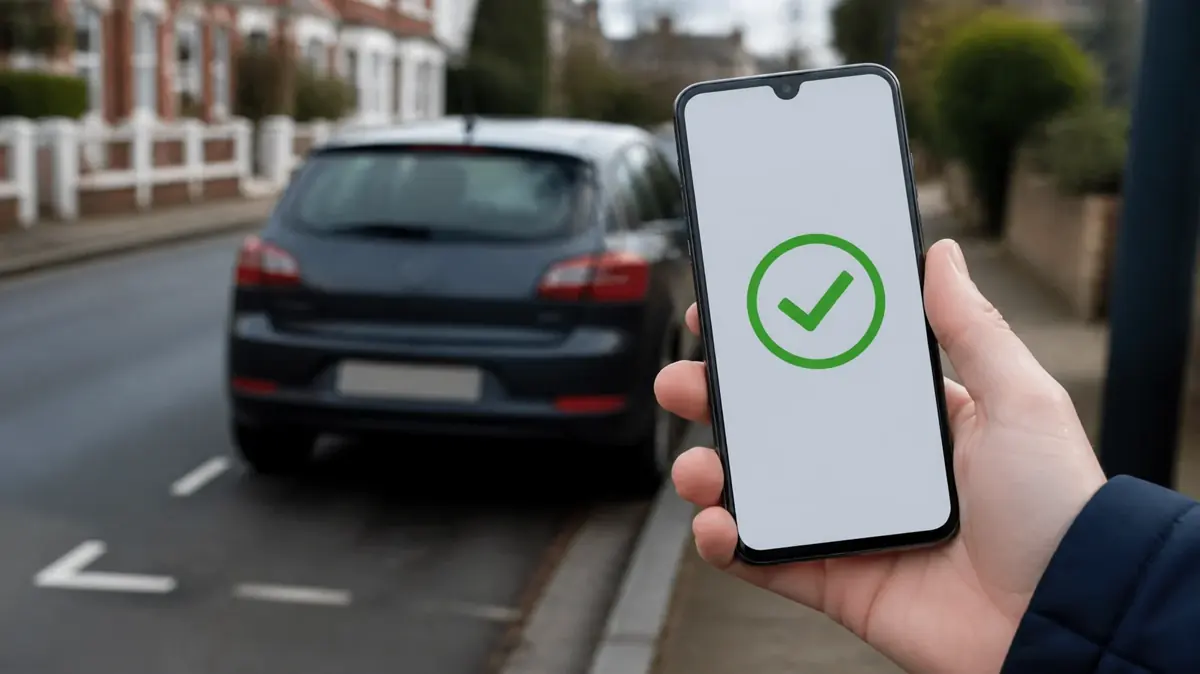
Person checking a car's MOT status on a smartphone beside a parked car

A motorcycle MOT check tells you whether a bike has a valid MOT and the exact date it expires. That is useful at the start of the riding season, when many bikes come out of winter storage with a certificate that ran out months ago, and it is essential before buying a used bike. Put the registration in the checker above and MOT Check Now returns the MOT status and expiry date held by the DVLA, plus the number of days remaining. This page explains what the result means for a motorcycle, what a test costs, what the tester looks at and what to do before you ride.

Motorbike riders search for “motorcycle MOT”, “motorbike MOT”, “bike MOT test” and “motorbike MOT near me”. They all mean a class 1 or 2 test, with a fee cap of £29.65 (£37.80 with a sidecar). Enter your registration in the checker to see when it expires, then read the MOT near me guide to choose a test centre that tests bikes.

Quick answers

  • Do motorcycles need an MOT? Yes, unless exempt. The first test is generally due by the third anniversary of registration, then every 12 months.
  • Maximum fee: £29.65 for a motorcycle of any engine size without a sidecar, and £37.80 with a sidecar. No VAT is charged.
  • Classes: class 1 for bikes up to 200cc, class 2 for larger bikes.
  • Earliest test that keeps your date: one month minus one day before expiry.
  • Riding without an MOT: a fine of up to £1,000, except when riding to a pre-arranged test or to or from a repair.
  • Dangerous defect: the bike must not be ridden. Riding it can mean a fine of up to £2,500, a ban and 3 penalty points.
01

Key facts at a glance

Question Answer
Fee cap, motorcycle without sidecar £29.65, any engine size
Fee cap, motorcycle with sidecar £37.80
Fee cap, three-wheeler up to 450kg £37.80
Fee cap, three-wheeler over 450kg and quad £54.85
VAT on the fee None charged
Test classes Class 1 up to 200cc, class 2 larger
First test Generally by the 3rd anniversary of registration, then every 12 months
Early-test window Up to one month minus one day before expiry
Fine, no valid MOT Up to £1,000
ULEZ standard for motorcycles Generally Euro 3, broadly bikes registered from about 2007
History available Tests in England, Scotland and Wales since 2005
Northern Ireland Run by DVA, a separate service
02

How to check a motorcycle MOT

  1. Find the registration. On a bike it is on the rear plate. Seller photos often hide it, so ask for a clear shot before you travel to see the bike.
  2. Enter it in the checker above. Capitals and spaces make no difference.
  3. Confirm the make and colour. They should match the bike you are looking at. A wrong match can mean a typing error or a plate that does not belong to the bike.
  4. Read the status and the days remaining. A bike that has been laid up often shows Not valid, which is your cue to book a test before the first ride.

The data comes from the DVLA Vehicle Enquiry Service. This site is independent and has no affiliation with the DVLA or DVSA. The official service is at GOV.UK.

Understanding the result

The DVLA record returns one of four MOT status values. Valid means a current MOT is on record, and the expiry date and days remaining tell you how long you have. Not valid means there is no current MOT on record. No details held by DVLA means the DVLA has no MOT information for that registration, which usually points to a mistyped plate, a bike too new to have had its first test, or an exempt vehicle. No results returned means the lookup produced nothing, so check the plate and try again. The tax status on the vehicle record is separate from the MOT, and the two dates are different, so look at both.

03

Motorcycle test classes

The MOT scheme groups vehicles into classes. For two-wheelers there are two. Class 1 covers motorcycles and motorcycle combinations up to 200cc, together with electric solo motorcycles up to 4kW maximum continuous rated power. Class 2 covers the larger motorcycles and combinations, including electric variants. A scooter, a naked bike, a tourer and an adventure bike are all motorcycles for this purpose, and the class depends on engine size or power and not on the style of the bike.

Other vehicles that riders sometimes own fall in different classes. Three-wheelers up to 450kg unladen weight are class 3, with a maximum fee of £37.80. Heavier three-wheelers and quadricycles are tested in class 4, with a maximum fee of £54.85. A motorcycle with a sidecar is tested as a motorcycle but carries the higher fee of £37.80. Our full guide to MOT test classes shows every class side by side.

The class matters for one practical reason. A test station must be approved for the class it tests and have suitable equipment and trained testers. A garage that tests cars may not test motorcycles, and one that tests small bikes may not be set up for larger ones or for sidecar outfits. Always confirm that the station tests your type of bike when you book.

04

What a motorcycle MOT costs

The maximum fee, with no VAT charged, depends on whether the bike has a sidecar:

Vehicle Maximum MOT fee
Motorcycle of any engine size, no sidecar £29.65
Motorcycle with sidecar £37.80

Those are caps. Garages may charge less, and repairs are not included. A sidecar outfit therefore costs more to test than a solo bike, and the extra applies whatever the engine size. See MOT cost for the full list of vehicle classes.

Maximum MOT fee: bikes compared with a car (no VAT) Motorcycle, no sidecar £29.65 Motorcycle with sidecar £37.80 Three-wheeler up to 450kg £37.80 Car, up to 8 passenger seats £54.85 Garages may charge less than the maximum. Repairs are extra.
Maximum MOT fees from GOV.UK. A solo motorcycle has the lowest cap of any vehicle type.
Maximum MOT test fees Bar chart of maximum MOT fees: motorcycle 29.65 pounds, motorcycle with sidecar 37.80, car 54.85, goods vehicle up to 3,000kg 54.85, 9 to 12 seat passenger 57.30, goods vehicle 3,000 to 3,500kg 58.60. No VAT, garages may charge less. Maximum MOT fees What a garage can charge at mostMotorcycle£29.65Motorcycle with sidecar£37.80Car (up to 8 seats)£54.85Goods up to 3,000kg£54.859–12 seat passenger£57.30Goods 3,000–3,500kg£58.60Maximum fees: no VAT is charged.Garages may charge less. Repairs are not part of the cap.Source: GOV.UK
Maximum MOT fees by vehicle type
05

When a motorcycle MOT is due

The first MOT is due by the third anniversary of registration, then every 12 months. Some vehicle types need their first test at one year, so check the date for your bike rather than assuming. The first MOT guide covers the dates.

Testing early

You can test up to one month minus one day before expiry and keep the same renewal date. If the MOT expires on 15 May, the earliest date that keeps it is 16 April. This suits riders well, because a test in early spring means any repairs are done before the best riding weather. If you test earlier than the window, the new certificate runs for one year minus a day from the pass date and the unused part of the old one is lost. The how early can you get an MOT guide has more worked examples.

MOT early test window example Calendar-style example: an MOT expiring on 15 May can be tested from 16 April and keep the same renewal date; earlier than that resets the renewal date. The early MOT window Example: MOT expires on 15 MayToo earlyrenewal resetsTest windowone month minus one dayExpiredAPR16Earliest test dateMAY15MOT expires16 April to 15 MayTest in this window and therenewal date stays 15 May.Before 16 AprilRenewal resets to one yearminus a day from the newpass date.Source: GOV.UK
The early-test window

Bikes that have been off the road

If the bike has been in storage and the MOT has expired, you cannot ride it on the road just to find a test centre. The exceptions are riding to a pre-arranged MOT test and riding to or from a place where repairs are being carried out. Riding without a valid MOT can lead to a fine of up to £1,000. A bike that has been declared off the road needs more thought, because a SORN and an MOT are separate matters. The SORN check shows whether a bike is declared off the road, and the tax check shows its tax status and due date. Tax and MOT dates are separate, so check both.

On SORN specifically: it means telling the DVLA you are taking the vehicle off the road, for example because it is kept in a garage or on private land. It starts immediately if the tax has expired or you are not applying in the month the tax is due to expire, and on the first day of the next month if you apply in the month the tax is due to expire. A refund is given for full months of remaining tax. You cannot use the bike on the road until it is taxed again. A bike that is not insured must be declared SORN, because the keeper of an uninsured vehicle that is not SORN can receive a £100 fixed penalty, with a court maximum fine of £1,000.

If the bike has sat all winter, look at the tyres, brake fluid, chain and lights before you book. Perished tyres and seized brakes are cheap to spot and expensive to fail.

06

What the tester checks on a motorcycle

The MOT checks that a vehicle meets minimum road safety and environmental standards on the day of the test. It is not a service, and it does not judge engine tuning or reliability. For a motorcycle, the inspection concentrates on the parts that keep you upright and visible. The list below describes the areas in general terms, and the official inspection manual holds the detail. Our MOT test checklist and how to prepare for an MOT guides explain the principle in plain English.

  • Brakes. Operation and condition of the front and rear brakes, including levers, pedals, hoses, discs and pads, and the performance measured on a brake tester.
  • Steering and handlebars. Free movement of the steering head, condition of the bearings, handlebar and its mountings, and the controls.
  • Suspension. Condition of the forks and rear shock absorbers, with attention to leaks and damage.
  • Wheels and tyres. Condition and security of the wheels, spokes where fitted, bearings and tyres. See the tyre guide.
  • Drive chain or belt. Condition, tension and guards, and for shaft-driven bikes the condition of the drive.
  • Frame and structure. Cracks, corrosion, damage and the security of mounted components.
  • Lights and indicators. Headlight, brake light, tail light, indicators and the number plate lamp, plus the alignment of the headlight.
  • Horn. It must work and be suitable.
  • Exhaust and emissions. Condition and security of the exhaust, with emissions and noise taken into account.
  • Registration plate and identification. The plate must be secure, legible and correctly formed, and the vehicle identification number must be present. See the number plate guide.
  • Sidecar. If one is fitted, its mounting, wheel, tyre and connection to the bike.

Because a bike has no door or windscreen to hide behind, a tester can see most of it. Neat preparation shows. A clean, dry bike with a lubricated chain, correctly inflated tyres and working lights is far less likely to cause a problem.

What the MOT checks Grid of twelve areas checked in a car MOT: lights, brakes, steering and suspension, tyres and wheels, seatbelts, exhaust and emissions, body and structure, windscreen and wipers, horn, registration plates, mirrors and vehicle identification number. What the MOT checks Main areas inspected on a carLightsBrakesSteering &suspensionTyres &wheelsSeatbeltsExhaust &emissionsBody &structureWindscreen& wipersHornRegistrationplatesMirrorsVehicle IDnumber (VIN)Based on the GOV.UK list of car parts checked at an MOT.Source: GOV.UK
What the MOT checks
07

Common failure areas on motorcycles

We do not publish pass rates, and no statistic is quoted on this page. What can be said in general terms is that a handful of categories cause most problems on bikes, and most of them are cheap to fix if you spot them before the test. The common MOT failure reasons page lists typical causes across all vehicles.

  • Lighting. Blown bulbs, cracked lenses and faulty indicators, often after a winter in storage.
  • Tyres. Worn tread, cracks, perishing on bikes that have sat unused, and incorrect pressures.
  • Brakes. Seized calipers, contaminated or old brake fluid, worn pads and perished hoses.
  • Chain and sprockets. Stretched or dry chains, hooked sprocket teeth and missing guards.
  • Steering head and suspension. Play in the steering bearings, leaking fork seals and worn rear suspension.
  • Corrosion. Rust on frames, exhausts and fastenings, especially on bikes ridden in wet and salty conditions.
  • Exhaust. Leaks, damage or components that do not meet the requirements.
  • Number plate. Non-standard plates or poor fixings.
08

If the bike fails its MOT

You can ride a failed bike away only if its current MOT is still valid and the test listed no dangerous defect. A dangerous defect means the bike must not be ridden on the road, with or without an MOT. Riding it can bring a fine of up to £2,500, a ban and 3 penalty points.

The defect categories are dangerous, major, minor and advisory. Dangerous and major both fail. Minor items and advisories appear on a pass, and an advisory means a part is not defective yet but will become so soon. An item fixed at the test centre during the test is recorded as a pass after rectification. These categories have applied since 20 May 2018. The common MOT failure reasons page lists typical causes, and the defect categories guide explains the grades.

MOT result types Six MOT outcomes: pass, advisory, minor, major, dangerous and PRS, with what each means and whether you can drive the vehicle away. What your MOT result means Defect categories and driving awayPassVehicle met the standard on theday.Drive away: yesAdvisoryNot defective yet but will besoon. Still a pass.Pass: keep watchMinorPresent, but not serious enough tofail.Pass: drive onMajorFail. Needs repair.Only if currentMOT is still validDangerousFail. Must never be driven.Never drive itPRSPass after rectification: fixed atthe test.Pass: drive onDrive-away after a fail needs a valid MOT and no dangerous defect.Source: GOV.UK
MOT result types

The retest rules apply to motorcycles as well:

  • Leave the bike at the test centre for repair and have it retested within 10 working days, and the partial retest is free.
  • Return to the same centre by the end of the next working day for a limited list of items, such as lights, mirrors and seatbelts where fitted, and the retest is free.
  • Take the bike away for repair and return within 10 working days for a reduced partial-retest fee.
  • Otherwise the full fee applies.

If you think a failure was wrong, you can appeal to the DVSA, and for a failed vehicle the complaint form must be sent within 14 working days. Our what to do after a failed MOT guide walks through the steps, and driving without an MOT explains the exceptions.

09

Exemptions and special cases

A motorcycle built or first registered more than 40 years ago may be exempt from the MOT, provided it has not had substantial changes, such as replacing the chassis, body, axles or engine in a way that changes how it works. An exempt bike must still be roadworthy, and many owners of older machines choose a test anyway for the peace of mind. Any voluntary test would appear in the history. This is separate from vehicle tax exemption, which applies to vehicles built before 1 January 1986, or first registered before 8 January 1986 if the build date is unknown. A bike can qualify for one exemption and not the other. Our exempt vehicles guide sets out who qualifies, and the historical MOT check shows past tests of older machines.

Northern Ireland is separate. Its MOTs are run by DVA, and a bike tested only there will not appear in the records we use. See MOT in Northern Ireland.

10

Buying a used motorcycle: what the check tells you

A valid MOT on a used bike is useful, but the history tells you more. Open the MOT history and read the advisories. Repeated notes about the same area, such as brake components or corrosion, suggest an issue the owner has been postponing. The mileage check compares the odometer readings recorded at each test and flags falls, large jumps and long stalls. It is an indicator, not proof of clocking, but it gives you a specific question for the seller.

Be aware of what the check cannot show. It does not cover finance, theft or write-off history, because that data is not available from the free official sources. Inspect the bike in person, ask to see the logbook and compare the frame and engine details with the paperwork. The vehicle check shows the DVLA record, and the Full Vehicle Report puts the timeline and mileage analysis in a £3.99 PDF, delivered as an instant download with an emailed link. We recommend a separate finance and stolen check from a provider that states it covers them before you hand over money.

Reading a bike’s history: what to look for

The history we show comes from the DVSA MOT record, which covers tests in England, Scotland and Wales since 2005. Each test shows the completed date, result, expiry date, odometer reading and unit, a test number and the defects recorded. Some tests may record that no odometer reading was available, which is worth a question. Bikes often have patterns that cars do not.

  • Low annual mileage. Many bikes are ridden seasonally, so small increases between tests are normal. What matters is that the readings never fall.
  • Long gaps. A missing year may mean the bike was off the road under SORN, which is common with bikes, or in storage. Ask the seller.
  • Repeated tyre or brake advisories. Components on a bike that sit unused for months can perish, so repeats are worth examining.
  • Corrosion notes. These tend to worsen and can affect frames, swingarms and exhaust systems.
  • Passes close to expiry. This can mean the owner tests only when it is required. That is not a problem in itself, but combine it with other signs.

For a step-by-step approach to the table itself, read how to read MOT history. For general guidance on viewing a used vehicle, see the used car checklist, much of which applies to bikes.

An illustrative example

Imagine a bike whose history shows a pass every year, with mileage rising by a modest and consistent amount, a chain advisory in one year and a tyre advisory in another, both gone by the next test. That reads as an owner who responds to advisories. Now imagine a bike whose reading drops between two tests. Not necessarily bad, since a dashboard replacement or a keying error can explain it, but it is a question for the seller, and a request for service receipts showing mileage is reasonable. This example is invented to show how to read a history and does not describe a real bike.

11

Preparing a bike for its test

  1. Clean it. A tester can see problems on a clean bike more easily, and you are likely to spot them yourself as you wash it.
  2. Check the lights. Headlight dipped and main beam, brake light on both the lever and the pedal, tail light, indicators and the number plate lamp.
  3. Look at the tyres. Tread, cracks, bulges and the correct pressures.
  4. Test the brakes. Lever and pedal feel, fluid level and colour, and any signs of leaks.
  5. Lubricate and adjust the chain. Check tension and guards.
  6. Move the steering lock to lock. It should be smooth with no notches or free play.
  7. Check the horn. It must work.
  8. Inspect the exhaust and plate. Look for leaks, loose fixings and a legible number plate.
  9. Bring the paperwork. Not essential, but it speeds the process.

Fixing a small fault the day before costs a few pounds. Finding it on the test costs a retest.

12

Riding in low emission zones

Motorcycles also face emission rules in some cities. In London the ULEZ standard for motorcycles is generally Euro 3, which broadly means bikes registered from about 2007. The daily charge for a non-compliant vehicle is £12.50. The zone runs 24 hours a day, every day except Christmas Day, and covers all London boroughs. Fully electric vehicles are not charged. Use the ULEZ checker for an estimate and confirm it with TfL. Bristol’s clean air zone does not charge motorbikes, and the clean air zone checker explains the position in other cities. Scotland has low emission zones in Glasgow, Edinburgh, Aberdeen and Dundee, and the rules for each are set locally. Zones change, so check the official council page before you travel. If you also ride into central London, the congestion charge check may be useful.

13

MOT, tax, insurance and SORN: how they fit together

Riders often mix up the four legal requirements that keep a bike on the road, so it helps to lay them side by side. Each has its own date, its own authority and its own consequence, and passing one does not satisfy the others.

Requirement What it is Where to check
MOT A test of road safety and environmental standards, normally every 12 months after the first test The checker on this page and the MOT check
Vehicle tax Paid to the DVLA. The standard rate is set each tax year, so check GOV.UK for the current figure. It does not transfer to a new keeper The tax check
Insurance Required unless the vehicle is declared SORN. We do not sell or arrange insurance Your own insurer
SORN A declaration that the bike is off the road, which removes the need to tax and insure it while it stays off the road The SORN check

A bike can be taxed with no MOT, or have an MOT with no tax. Each is a separate offence, and each has to be put right separately. When you buy a used bike, tax is not transferred with it, so you must tax it yourself before you ride it away. If the seller tells you the tax carries over, they are mistaken.

14

Scooters, learner bikes and electric machines

The word motorcycle covers a wide range of machines for MOT purposes. A learner-legal commuter scooter and a large touring bike are both tested, and a scooter will usually fall in class 1 if it is up to 200cc. Check the engine size on the V5C and on the DVLA record we display, since the engine size shown for a bike is a quick way to work out its class.

Electric motorcycles are tested too. Class 1 includes electric solo motorcycles up to 4kW maximum continuous rated power, and class 2 includes larger electric machines. Because there is no exhaust, the emissions part of the test does not apply in the same way, but the brakes, steering, suspension, wheels, tyres, lights and frame are inspected like those of any other bike. Electric vehicles are not charged under the ULEZ.

Quadricycles and heavier three-wheelers are tested in class 4 and have a maximum fee of £54.85, while a three-wheeler up to 450kg is tested in class 3 with a maximum fee of £37.80. If you own one of these, confirm that the garage can handle your vehicle before you book.

15

Modified bikes, exhausts and number plates

Many riders modify their bikes, and some changes can cause a problem at test. Replacement exhausts must be secure, free from leaks and must not be so damaged or altered that they fail the requirements. Aftermarket lighting, handlebars, mirrors and footrests are inspected for security and suitability. Number plates must be the correct size and format and securely fixed, and our number plate guide explains how a registration is built. If you are unsure whether a modification will be accepted, ask the test station before the test rather than after a fail, and keep the receipts and any documentation that came with the part.

A note on records: if a bike has been modified, the details held by the DVLA, such as colour or engine size, may no longer match. A mismatch between the record and the bike does not prove anything wrong, but if you are buying, ask the seller to explain it and check that the V5C has been updated.

16

Worked date examples

Dates are the part of the MOT that people most often get wrong, so here are three invented examples to practise on.

  • Example one. A bike’s certificate expires on 15 May. The earliest test that keeps the 15 May renewal date is 16 April. A test on 20 April produces a new certificate running to 15 May the following year.
  • Example two. The same bike is tested on 5 April instead, because the garage had a free slot. The test is earlier than the window, so the new certificate runs for one year minus a day from 5 April. The old May date no longer counts, and the bike is now on an April cycle.
  • Example three. A bike has been stored since the autumn and its certificate expired in January. In March the owner books a test for next week. Between now and then the bike cannot be ridden on the road, except to the pre-arranged test or to or from a repair. If it must be moved earlier, it should be trailered or pushed.
17

Frequently confused points

  • Engine size and fee. The fee for a solo motorcycle does not change with engine size. A small scooter and a large tourer have the same cap.
  • Sidecar and fee. The sidecar increases the cap to £37.80 whatever the bike.
  • MOT and warranty or service. An MOT is not a service. A bike can pass and still need work.
  • MOT date and tax date. They are separate and rarely the same.
  • Valid on the checker and valid on the road. The checker shows the record. If you have just had a test, the record may take a short time to update, so carry your paperwork.
18

Glossary

Advisory
A note on a pass that a component is not yet defective but will probably become defective soon.
Class 1 and class 2
The MOT classes for motorcycles. Class 1 covers up to 200cc, class 2 covers larger bikes.
Combination
A motorcycle with a sidecar fitted.
Dangerous defect
A defect so serious that the bike must not be ridden on the road, with or without an MOT.
DVA
The agency that runs MOT testing in Northern Ireland.
Euro 3
The emissions standard that motorcycles generally need to meet to avoid the ULEZ charge.
Early-test window
The period of up to one month minus one day before expiry in which you can test and keep your renewal date.
PRS
Pass after rectification. A fault fixed at the test centre during the test.
SORN
Statutory Off Road Notification, a declaration that a vehicle is off the road.
V5C
The vehicle registration certificate, often called the log book.

Limits of this check

The result is only as current as the DVLA record, so a test completed today may take a short time to appear. The status does not show insurance, finance or the condition of the bike. To avoid forgetting the date, set an MOT reminder. If you lose your certificate, see the MOT certificate page. For more on where the information comes from, read how we get our data, and for the people behind the site see the about page.

Contains public sector information licensed under the Open Government Licence v3.0.

Full Vehicle Report (PDF)

Complete MOT timeline, mileage analysis, recurring advisories and a plain-English summary in one downloadable document.

Frequently asked questions

How do I check a motorcycle's MOT?

Enter the bike's registration number in the checker on this page. It shows the MOT status, expiry date and days remaining from the DVLA Vehicle Enquiry Service. It is free and does not need an account.

How much does a motorcycle MOT cost?

The maximum fee is u00a329.65 for a motorcycle of any engine size without a sidecar. With a sidecar the maximum is u00a337.80. No VAT is charged, garages may charge less, and repairs are extra.

Can I ride my bike with an expired MOT?

Only to a pre-arranged MOT test or to or from a place where repairs are being carried out. Riding without a valid MOT can lead to a fine of up to u00a31,000. A bike that has been in storage should be checked before the first ride of the season.

When does a new motorcycle need its first MOT?

Generally by the third anniversary of registration, then every 12 months. Some vehicle types need a first test at one year. Until the first test is done there is no expiry date to display.

How early can I test my motorcycle and keep the renewal date?

Up to one month minus one day before the current MOT expires. If it expires on 15 May, the earliest test that keeps the date is 16 April. Earlier than that, the new certificate runs for one year minus a day from the pass date.

What happens if my bike fails with a dangerous defect?

It must not be ridden on the road, even if the old MOT is still valid. Riding a vehicle with a dangerous defect can bring a fine of up to u00a32,500, a driving ban and 3 penalty points. Have it repaired before moving it by road.

Does a motorcycle with a sidecar cost more to test?

Yes. The maximum fee for a motorcycle with a sidecar is u00a337.80, compared with u00a329.65 for a motorcycle without one. Garages may charge less than either figure.

Does a valid MOT mean a used motorcycle is a safe buy?

No. It means the bike met the minimum standard on the day it was tested. Read the advisories in the history, check the mileage readings, inspect the bike in person and ride it before buying.

What are MOT classes 1 and 2?

Class 1 covers motorcycles and combinations up to 200cc and electric solo motorcycles up to 4kW. Class 2 covers larger motorcycles and combinations, including electric variants. The maximum fee is the same for a solo bike in either class, at u00a329.65.

Do motorcycles over 40 years old need an MOT?

Not if they were built or first registered more than 40 years ago and have not had substantial changes, such as replacing the chassis, body, axles or engine in a way that changes how it works. They must still be roadworthy. Tax exemption uses different dates.

Do motorbikes pay the ULEZ charge?

They can. The ULEZ standard for motorcycles is generally Euro 3, which broadly means bikes registered from about 2007. A non-compliant, non-exempt vehicle pays u00a312.50 per day. Use the ULEZ checker for an estimate and confirm with TfL.

Does my bike need an MOT if it is on SORN?

A SORN means the bike is off the road and not in use. The MOT and the SORN are separate matters, so check both, and remember you cannot use the bike on the road until it is taxed, and you need a valid MOT unless you are riding to a pre-arranged test or a repair.

How far back does a bike's MOT history go?

The online MOT history records tests in England, Scotland and Wales since 2005. Northern Ireland MOTs are run by DVA and do not appear in it.

Does this check show finance or theft on a used bike?

No. Finance, stolen and write-off data are not available from the free official sources we use. Before buying privately, run a separate check from a provider that states it covers those records.

Need it all in one document?

The Full Vehicle Report gives you the complete MOT timeline, mileage analysis and summary as a PDF you can keep.

Get the report £3.99