Free UK MOT, tax and vehicle checksOfficial DVSA & DVLA dataNo sign-up · UK vehicles only

Check ULEZ Compliance for Any UK Number Plate

Is your car ULEZ compliant? Enter the registration for an instant estimate and the £12.50 daily charge risk.

Free. No sign-up. We never show owner details.

Demo mode: results are sample data. Try AB12CDE, CLOCK1, DIESEL1, EV21, EXPIRED1 or NEWCAR.

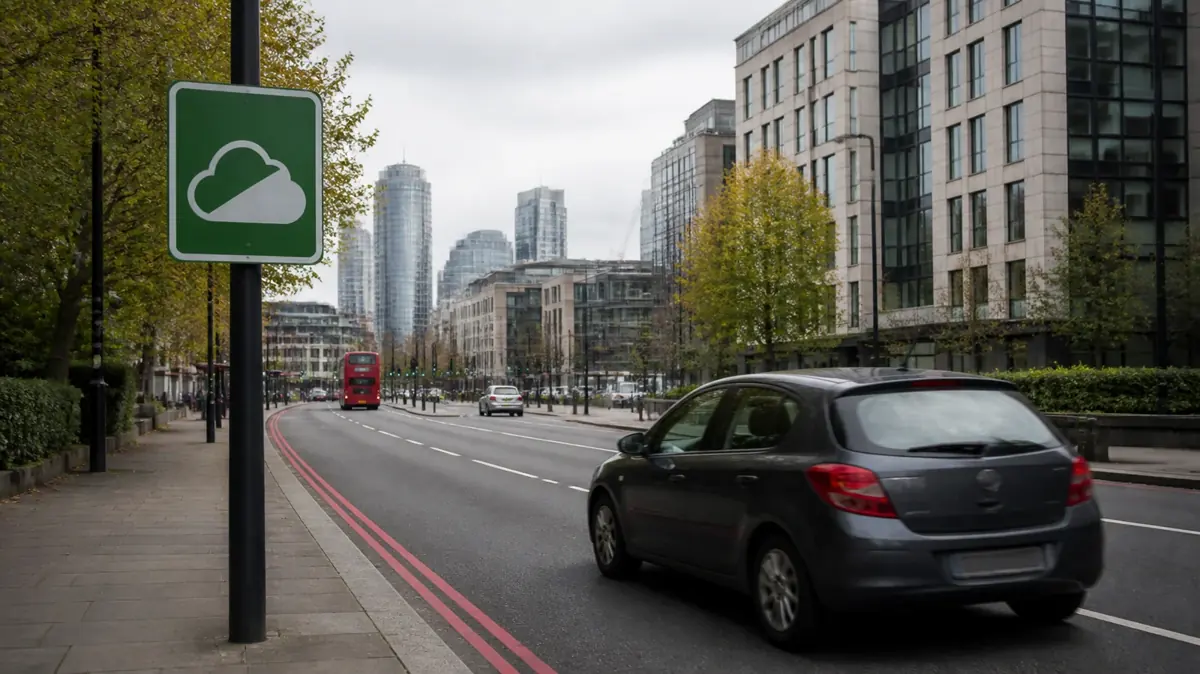
A car driving past a green low emission zone sign on a London street

A ULEZ checker tells you whether a vehicle is likely to meet the emission standards of London’s Ultra Low Emission Zone, or whether driving it in the zone would cost £12.50 a day. Enter a registration number above and MOT Check Now reads the vehicle’s DVLA record, looks at its fuel type, Euro status and registration year, and gives an estimate of whether it is compliant. It is a quick way to answer “is my car ULEZ compliant?” before a trip or a purchase.

It is an estimate, and we say so up front because ULEZ decisions cost real money. Transport for London (TfL) runs the zone and its own checker is the final word. Use ours to get a fast, free read, then confirm with TfL before you drive into the zone. This page explains how our estimate works, what the Euro standards mean, the standard for each vehicle type, how hybrids are treated, what the charge covers, the exemptions we can state, worked examples, edge cases such as imports and vehicles with no Euro status, and what to do if the answer is bad. If you are travelling outside London, our clean air zone checker covers the charging zones in other UK cities.

“ULEZ checker”, “check ULEZ”, “is my car ULEZ compliant” and “ULEZ compliance checker” are all the same question, and the answer depends on fuel type and Euro emissions standard. The final word on charges is TfL’s, so confirm there before a journey. If you are weighing up the other London daily charge as well, see the congestion charge check.

Quick answers

  • What is the charge? £12.50 per day for a vehicle that is not compliant and not exempt.
  • When does it apply? 24 hours a day, 7 days a week, every day except Christmas Day (25 December).
  • Where? Across all London boroughs. The M25 itself is not included.
  • Petrol cars and vans: generally need Euro 4, broadly registered from 2005 or 2006.
  • Diesel cars: generally need Euro 6, broadly registered from September 2015.
  • Motorcycles: generally need Euro 3, broadly registered from 2007.
  • Fully electric vehicles: not charged.
  • Is our result official? No. It is an estimate. TfL’s checker is the authority.
01

Key facts at a glance

Question Short answer
Who runs ULEZ? Transport for London (TfL)
Daily charge for a non-compliant, non-exempt vehicle £12.50
Hours of operation 24 hours a day, 7 days a week, except Christmas Day
Area All London boroughs, not including the M25
Petrol cars and vans Euro 4 (broadly 2005 or 2006 onwards)
Diesel cars Euro 6 (broadly September 2015 onwards)
Motorcycles Euro 3 (broadly 2007 onwards)
Fully electric vehicles Not charged
Vehicles over 3.5 tonnes (lorries, vans, specialist) and buses and coaches over 5 tonnes Do not pay ULEZ, may fall under the Low Emission Zone
Non-UK-registered vehicles Must be registered with EPC plc
Official check TfL’s ULEZ vehicle checker

How to use the ULEZ checker and what you will see

Type the registration in the box at the top of the page. Within a few seconds you will see:

  • The vehicle details we matched: make, colour, fuel type, engine size and year of manufacture. Compare these with the vehicle in front of you to make sure the registration is right.
  • The Euro status, where the DVLA holds one: the emissions standard the vehicle was approved to.
  • Our compliance estimate: an indication of whether the vehicle is likely to meet the ULEZ standard for its type.
  • Related checks: MOT status and tax status from the same record, since they are usually checked together.
Sample result (example vehicle)
Nissan Qashqai

White · Diesel · 1,461cc · Built 2013

GBAB12 CDE
MOT validValid until 21 Mar 2027. 138 days left.
MOT expiry21 Mar 2027
Days left138
Last mileage113,209 mi
TaxedVehicle tax is in place.
Tax statusTaxed
Tax due29 Aug 2027
Last V5C issued8 May 2026

Vehicle details

Make
Nissan
Model
Qashqai
Colour
White
Fuel type
Diesel
Engine size
1,461 cc
Year of manufacture
2013
First registered
22 Mar 2013
CO2 emissions
127 g/km
Euro status
EURO 5
Marked for export
No

History indicators

Low concernAn indicator from the recorded MOT data, not a verdict.
  • The same advisories keep coming back.

Sources: DVSA MOT history and DVLA vehicle data. Contains public sector information licensed under the Open Government Licence v3.0.

The DVLA record can also include other fields that help you judge a result, such as CO2 emissions, the month of first registration, the wheel plan, the type approval and a real driving emissions figure. We show what the record holds. We never show keeper or owner details, because the official data does not contain them.

A five-step routine for a fast answer

  1. Enter the registration and check the make, colour and fuel type match the car.
  2. Read the Euro status line. If one is shown, that is the strongest signal.
  3. Read our estimate, and note whether it relied on Euro status or only on fuel type and registration year.
  4. Open TfL’s official vehicle checker and enter the same registration.
  5. If the two answers differ, follow TfL, and consider what might explain the gap (retrofit, record gaps, an exemption).
03

What the Euro standards actually are

Euro emissions standards are a ladder of tailpipe limits that new vehicles must meet when they are type-approved for sale. Each step on the ladder, from Euro 3 through Euro 4 and Euro 5 to Euro 6, is stricter than the one before it, particularly for the pollutants that harm air quality in towns and cities, such as nitrogen oxides from diesel engines and particulate matter. A higher number means a newer and cleaner design, but the numbers are not the same age for every fuel. Diesel engines were given tougher nitrogen oxide limits at Euro 6 than at Euro 5, which is why ULEZ asks for Euro 6 from diesels and a lower step from petrol cars.

A vehicle is not “Euro 4” because of its age. It is Euro 4 because it was approved against the Euro 4 limits. Because approval dates and registration dates do not line up perfectly, two cars with the same registration year can sit on different steps. That is the main reason any age-based shortcut can be wrong, and it is why the Euro status on the DVLA record is the most direct indicator we have.

UK number plate format The current UK registration format AB12 CDE on a yellow rear number plate: two letters for the area, two numbers for the age identifier, and three random letters. UK number plate format What each part of AB12 CDE meansCurrent UK format (in use since 2001)AB12CDEExample only. Rear plate style shown.ABArea codeThe first two lettersshow the region wherethe vehicle was firstregistered.12Age identifierThe two numbers showwhen the registrationwas issued.CDERandom lettersThe last three lettersare assigned atrandom.Source: GOV.UK
How to read a UK number plate, which helps you place a car's registration year
ULEZ standard by vehicle type Petrol cars and vans Euro 4 broadly 2005 or 2006 on Diesel cars Euro 6 Sep 2015 on Motorcycles Euro 3 broadly 2007 on Fully electric Not charged any date Registration years are a guide. The Euro standard the vehicle was approved to is what counts. Confirm with TfL.
The ULEZ standard for each main vehicle type. Bar length is for illustration only and does not measure emissions.
04

How our estimate works, and why it is only an estimate

ULEZ compliance depends on the vehicle’s emissions standard, the fuel it burns and the type of vehicle it is. Our checker uses three inputs from the DVLA record:

  1. Fuel type. Petrol and diesel are held to different standards. Fully electric vehicles are not charged.
  2. Euro status. Where the DVLA record includes a Euro status, we use it. This is the most direct indicator.
  3. Registration year. Where Euro status is missing, we fall back on the year of registration, because the Euro standards came in over time and broadly line up with dates.

That fallback is where errors creep in. Euro standards apply on type-approval dates, not on a single January each year, so a car registered in the year a standard started may or may not be built to it. Some manufacturers also met a standard before it was mandatory, and some vehicles of the same model and year can differ. That is why we call the output an estimate and why we ask you to verify with TfL.

We do not hold a TfL database, and we do not know whether a vehicle has been retrofitted, granted a special exemption or registered for a discount. Those are held by TfL. Nor do we know whether a charge has already been paid for a given day.

How to read the three possible outcomes

What you see What it usually means What to do
Likely compliant, based on Euro status The record shows a Euro standard that meets the requirement for the fuel type Still confirm with TfL before travel, especially if you drive in often
Likely not compliant The Euro status or fuel type and year suggest the vehicle falls short Check TfL, then decide whether to pay, avoid the zone or change vehicle
Uncertain or based on registration year only The record has no Euro status, so we relied on dates Treat as a prompt to check, and rely on TfL’s answer
05

The ULEZ standards by vehicle type

The zone applies a different standard to different vehicle types. The broad rules are:

Vehicle Standard to meet Broadly registered from
Petrol cars and vans Euro 4 2005 or 2006
Diesel cars Euro 6 September 2015
Motorcycles Euro 3 2007
Fully electric vehicles Not charged Any date

The “broadly registered from” column is a guide only. What counts is the Euro standard the vehicle was approved to, not its age in years.

Petrol cars

Petrol cars generally need to meet Euro 4. A petrol car first registered from around 2005 or 2006 usually does. Older petrol cars are the most likely to be charged. Because many petrol cars from the mid-2000s sit right on the line, this is where the registration-year fallback is least reliable and a TfL check matters most. If you are looking at a petrol car from around that time, the Euro status line in the result is worth more than any rule of thumb.

Diesel cars

Diesel cars need Euro 6, which in practice means most registered from September 2015. This catches many people out, because a diesel car from 2012 or 2013 can look modern and still be charged. A diesel can be only a few years old and still not meet the standard. Our checker uses the Euro status on the DVLA record first for this reason. If you are shopping for a used diesel that you plan to drive into London regularly, compliance should be one of the first things you check, not the last.

Motorcycles

Motorcycles need to meet Euro 3, which broadly means registered from 2007. Many bikes from before that date will be charged. If your motorcycle is close to the line, check the exact record with TfL. For the MOT side of motorcycle ownership see our motorcycle MOT check.

Vans and larger vehicles

Light vans are generally assessed against the same kind of Euro standards as cars, by fuel type, so run the registration through the checker and verify the result with TfL. Our van MOT check shows the MOT record for the same vehicle. Lorries, vans and specialist heavy vehicles over 3.5 tonnes do not pay ULEZ, and neither do buses and coaches over 5 tonnes. They may be covered by the separate London Low Emission Zone instead, so check that scheme if you drive a heavy vehicle.

The weight that matters is the vehicle’s plated weight, not how heavily it is loaded on a given day. The DVLA record can include a revenue weight figure, which is a useful clue, but the plated weight on the vehicle and the information in the vehicle’s documents are what you should confirm when a van sits close to a weight boundary.

06

Hybrids and plug-in hybrids: what actually decides compliance

Hybrids are the question most ULEZ pages avoid. The honest answer is that a hybrid is not judged as a separate category. It is judged on the Euro standard of its petrol or diesel engine. A petrol hybrid that meets Euro 4 is treated like a Euro 4 petrol car, and a diesel hybrid is held to the diesel standard.

That means:

  • A newer petrol hybrid or plug-in hybrid is very likely to be compliant, because the petrol engine will meet the standard.
  • An older hybrid is not automatically exempt. Being a hybrid does not override the Euro status of the engine.
  • A plug-in hybrid that you run mostly on battery is still assessed on its engine standard. Running on electric for a trip does not change the vehicle’s status.
  • A fully electric vehicle is a separate case and is not charged.

Because manufacturers describe hybrid powertrains in different ways, the fuel type on the DVLA record may read as hybrid electric, petrol or something else. Treat our result as a starting point for hybrids and confirm with TfL’s official checker.

07

Electric, hydrogen and other fuel types

Fully electric vehicles produce no tailpipe emissions and are not charged. If your vehicle is listed as electric on the DVLA record, you can expect that to hold, though it is still sensible to confirm with TfL. Vehicles that run on other fuels, such as gas conversions or fuel types the record shows as “other”, are the cases where an automated estimate is least dependable. If the fuel type is unusual, the Euro status and TfL’s own checker should settle the matter rather than our estimate.

A conversion, such as a petrol car fitted with an aftermarket gas system, does not necessarily change the Euro standard the vehicle was approved to, and the record does not always reflect modifications. Treat any converted or heavily modified vehicle as one to confirm directly with TfL.

08

The charge, the hours and the area

If a vehicle is not compliant and not exempt, the ULEZ charge is £12.50 per day. The charge applies:

  • 24 hours a day, 7 days a week, every day of the year except Christmas Day (25 December).
  • Across all London boroughs. The zone does not include the M25 itself.

The charge is per day, so check TfL’s rules on how a charging day is defined and when payment is due before a late-night trip. The official ULEZ page on TfL has the live details, boundaries and payment options. We do not quote Congestion Charge or penalty amounts here, because those are separate schemes and figures that change. The congestion charge check page explains how the two London charges differ.

How to pay

Payment is made to TfL, not to us. TfL’s website sets out the accepted payment methods and the deadline for paying after a journey. We cannot take payment, check whether a payment has been made or extend a deadline. Always keep the confirmation TfL gives you, because it is the evidence you will need if a notice is later issued in error.

09

Worked examples

The examples below are illustrations of how the rules play out. They are not records of real vehicles, and the final answer for any real car is always TfL’s.

Example 1: a petrol hatchback from the mid-2000s

A petrol car first registered in 2006 shows Euro 4 on its DVLA record. Petrol cars need Euro 4, so our estimate would say likely compliant. The same car with no Euro status on the record would be judged on its registration year alone, and since 2005 and 2006 are the broad starting years, the estimate would be less certain. In that case a TfL check settles it.

Example 2: a diesel family car registered in 2013

A diesel car registered in 2013 may show Euro 5. Diesel cars need Euro 6, so the car would not meet the ULEZ standard and would be charged £12.50 for each day it is driven in the zone unless an exemption applies. It looks fairly recent, which is exactly why diesels catch people out. A diesel registered after September 2015 with Euro 6 on the record would be a different story.

Example 3: a plug-in hybrid

A plug-in hybrid with a petrol engine that meets Euro 4 or better is treated like a compliant petrol car. The fact that it can run on battery is helpful for fuel costs but is not what decides compliance.

Example 4: an older motorcycle

A motorcycle first registered before 2007 is likely to fall short of Euro 3 and may be charged. A bike registered from 2007 is likely to meet it. For a bike right on the line, check the record with TfL.

Example 5: a small van

A diesel van under 3.5 tonnes is assessed against the Euro standard for its fuel type, so an older diesel van can be charged. A diesel lorry over 3.5 tonnes does not pay ULEZ but may fall under the Low Emission Zone instead.

10

Edge cases: imports, missing Euro status and unusual records

Imported vehicles

A vehicle imported into the UK and registered with the DVLA will normally have a UK record, but the details held about its emissions approval may be thinner than for a car built and sold new in the UK. The record can show a type approval field, and some imports have no Euro status at all. If you are buying an import, check ULEZ compliance with TfL before you commit, because registration year alone can mislead when a car was first registered abroad. A vehicle still registered abroad is a different case: non-UK-registered vehicles must register with EPC plc, and our checker cannot assess them.

Vehicles with no Euro status on the record

Many older vehicles, some imports and some unusual models have no Euro status held. When that happens we use fuel type and registration year. The result is flagged as less certain and should be treated as a prompt for an official check, not an answer.

Vehicles marked for export or recently re-registered

The DVLA record can include a marked-for-export flag. If a vehicle has been exported or re-registered, the record you see may not match the vehicle you are looking at. Always compare the make, colour and fuel type shown with the vehicle in front of you.

Private plates and cherished transfers

A registration number can be moved from one vehicle to another. The record belongs to the vehicle currently carrying the number. If the make and model shown do not match the car you are inspecting, stop and find out why before relying on any result. Our number plate guide explains how plates work.

Classic and historic vehicles

Being exempt from the MOT or from vehicle tax because of age does not by itself exempt a vehicle from ULEZ. The exemptions for MOT and tax are separate systems with their own rules, set out in our MOT exempt vehicles guide. TfL publishes its own rules on any ULEZ treatment of historic vehicles, so read the TfL page rather than assuming.

Vehicles recently modified

If a vehicle has been repowered, retrofitted or had its engine changed, the DVLA record may not reflect that. In such cases rely on documents and TfL, not on the record or our estimate.

11

Exemptions we can state

  • Fully electric vehicles are not charged.
  • Lorries, vans and specialist heavy vehicles over 3.5 tonnes do not pay ULEZ, and neither do buses and coaches over 5 tonnes. They may be subject to the Low Emission Zone.

TfL runs other exemptions and discounts, and the rules for those can change, so we do not list them as fact here. If you think your vehicle may qualify, check the TfL page directly. Do not assume that an exemption applies until TfL confirms it, and do not assume that one you read about elsewhere is still in force.

12

What to do if your vehicle is not compliant

  1. Confirm with TfL first. Use TfL’s official vehicle checker with your registration. If our estimate and theirs differ, TfL’s answer is the one that counts.
  2. Pay the daily charge if you have to drive in. It may be reasonable for occasional trips. Pay it through TfL, and pay by the deadline TfL sets.
  3. Avoid the zone. Plan a route that stays outside the boundary, or use public transport for the last leg.
  4. Consider replacing the vehicle. If you drive in London often, a compliant car may save money over time. Before buying, run the used car through this checker and our vehicle check, and read the used car checklist.
  5. Look at retrofit options. For some vehicles, a retrofit that cuts emissions may be available. Retrofit eligibility is specific to the vehicle, so ask the supplier and check how TfL treats it.
  6. Challenge a wrong notice. If you receive a penalty and believe the vehicle is compliant, or you paid, TfL has a process for representations and appeals. Keep your payment confirmation and the vehicle details, and follow the instructions on the notice.

Thinking about the cost over time

A single charged day costs £12.50. The calculation that matters is how many days a year you expect to drive in the zone. Occasional visits may cost less than the difference between running a compliant and a non-compliant car, while daily commuting changes the sums quickly. Do the sum with your own numbers, and do not forget that a replacement vehicle brings its own costs, including tax, insurance and servicing. We do not give financial advice, but a calm comparison on paper beats a rushed decision after a charge notice arrives.

Before you buy a used car for London, check the compliance and the MOT together. A car that passes ULEZ but has a poor MOT record can cost more than the daily charge. The MOT history shows previous failures and advisories.

13

Checking a car you are about to buy

ULEZ status is one of several things worth confirming on a used car that will be driven in London. A sensible sequence is:

  1. Run the registration through this checker for the fuel type, Euro status and estimate.
  2. Open the MOT history and look for repeated advisories, past failures and odd gaps. Our guide on how to read MOT history shows what to look for.
  3. Look at the mileage check for falls or jumps in the recorded odometer readings. This is our own analysis of recorded readings and an indicator, not proof of anything.
  4. Check the tax status and the SORN status. Remember that tax is not transferred with a sold vehicle, so the new keeper must tax it before driving.
  5. Compare cars side by side with compare cars if you are choosing between candidates.
  6. Confirm ULEZ with TfL before you hand over any money.
14

Common mistakes with ULEZ checks

  • Assuming age equals compliance. A relatively recent diesel can be non-compliant, and an older petrol can be fine. Look at the Euro standard, not the number plate year alone.
  • Ignoring Euro status variations. Two cars of the same model and year can have different approvals. Where possible, rely on the Euro status on the record.
  • Treating hybrids as automatically exempt. They are judged on their engine standard.
  • Forgetting the zone covers all boroughs. It is not limited to central London.
  • Assuming nights and weekends are free. The charge runs every day except Christmas Day, 24 hours a day.
  • Using a non-UK plate without registering. Non-UK-registered vehicles must register with EPC plc, and our checker works from UK DVLA records, so it cannot assess them.
  • Treating our estimate as a certificate. It is a guide. TfL’s checker is the authority.
  • Not rechecking after a change. If the vehicle has been modified, check again.
  • Mixing up ULEZ and the Congestion Charge. They are separate charges with separate rules, and a compliant car can still owe the Congestion Charge.
  • Mistyping the registration. A single wrong character returns a different vehicle. Always compare the make and colour on screen.
15

A short checklist before you drive into London

  • I have checked the registration with this tool and with TfL’s official checker.
  • I know whether the vehicle is petrol, diesel, hybrid or electric, and its Euro status.
  • I know the charge is £12.50 per day if the vehicle is not compliant and not exempt, and that it applies every day except Christmas Day.
  • I know how and when to pay through TfL, and I will keep the confirmation.
  • I have read the congestion charge check page, because that is a separate charge.
16

Glossary

ULEZ
Ultra Low Emission Zone, London’s daily charging scheme for vehicles that do not meet set emission standards.
LEZ
Low Emission Zone. In London it applies to some heavy vehicles. Scotland also has Low Emission Zones in several cities.
Euro standard
A tailpipe emissions standard a vehicle is approved against. Higher numbers are stricter.
Euro status
The Euro standard shown on a vehicle’s DVLA record, where one is held.
TfL
Transport for London, which runs ULEZ and the Congestion Charge.
EPC plc
The organisation named by TfL for registering non-UK vehicles for the ULEZ.
DVLA
The Driver and Vehicle Licensing Agency, which holds the vehicle record we read.
Retrofit
A modification that reduces a vehicle’s emissions. Whether it counts is for TfL to decide.
Plug-in hybrid
A vehicle with a battery that can be charged from the mains plus a petrol or diesel engine. Judged on the engine’s Euro standard.
Type approval
The process by which a vehicle design is certified against legal standards before sale.

Limits of this checker

The checker works from the DVLA Vehicle Enquiry Service and has no direct feed from TfL. If the Euro status is missing from the record, our estimate leans on fuel type and registration year, which is less precise. It cannot see retrofits, exemptions, discounts or payments, and it cannot assess non-UK vehicles. It will not tell you whether the vehicle is insured, taxed or roadworthy, though the same record includes the tax status and MOT status. Read how we get our data and our editorial policy for how we handle sources and corrections, or see about us.

MOT Check Now is independent and is not affiliated with TfL, the DVLA, the DVSA or GOV.UK. Registration numbers entered are processed to fetch the vehicle record. Contains public sector information licensed under the Open Government Licence v3.0. If something on this page looks wrong or out of date, please contact us.

Buying a car and want the whole picture? The Full Vehicle Report costs £3.99 and includes the MOT timeline, mileage analysis and a plain-English risk summary. It does not include finance, stolen or write-off data. For more help, see the guides.

Full Vehicle Report (PDF)

Complete MOT timeline, mileage analysis, recurring advisories and a plain-English summary in one downloadable document.

Frequently asked questions

How does the ULEZ checker work?

You enter a UK registration number and we read the DVLA record for fuel type, Euro status and registration year. From those we estimate whether the vehicle meets the ULEZ standard for its type. It is an estimate, so confirm with TfL's official checker before driving in the zone.

How do I know if my car is ULEZ compliant?

Petrol cars generally need Euro 4 (broadly registered from 2005 or 2006), diesel cars need Euro 6 (broadly from September 2015), and fully electric vehicles are not charged. Age alone is not reliable, so check the Euro status with TfL.

What is the ULEZ charge and when does it apply?

The charge is u00a312.50 per day for vehicles that are not compliant and not exempt. It runs 24 hours a day, 7 days a week, every day except Christmas Day, across all London boroughs. It does not include the M25.

Are hybrid cars ULEZ compliant?

A hybrid is judged on the Euro standard of its petrol or diesel engine, not as a separate category. Newer hybrids usually meet the standard, but an older hybrid is not automatically exempt. Check with TfL if you are unsure.

Do motorcycles and vans pay ULEZ?

Motorcycles need to meet Euro 3, which broadly means registered from 2007. Light vans are assessed on Euro standards by fuel type, while lorries and vans over 3.5 tonnes and buses and coaches over 5 tonnes do not pay ULEZ, though they may pay the Low Emission Zone charge.

Is a fully electric car exempt from ULEZ?

Yes, fully electric vehicles are not charged the ULEZ daily charge. Plug-in hybrids are different and are judged on their engine's emissions standard.

Can I check a foreign-registered vehicle?

Our checker works from UK DVLA records, so it cannot assess non-UK plates. Non-UK-registered vehicles must register with EPC plc to pay or be assessed for the ULEZ.

Why does your result differ from TfL's?

Our result is an estimate based on fuel type, Euro status and registration year, and we cannot see retrofits, exemptions or TfL's own records. If the two differ, follow TfL's answer.

What does Euro 4, Euro 5 and Euro 6 mean?

They are steps in a ladder of tailpipe emission limits that vehicles are approved against. Each step is stricter than the last. ULEZ asks petrol cars to meet Euro 4 and diesel cars to meet Euro 6, so a Euro 5 diesel falls short of the diesel standard.

Why is my fairly new diesel car not compliant?

Compliance depends on the Euro standard the car was approved to, not its age. A diesel registered before about September 2015 may be Euro 5 or lower, which does not meet the Euro 6 diesel requirement.

What if my vehicle has no Euro status on its record?

We then use fuel type and registration year, which is less precise, and we flag the result as less certain. Use TfL's official checker to settle it.

Does the ULEZ charge apply at night and at weekends?

Yes. It applies 24 hours a day, 7 days a week, every day except Christmas Day.

Does the checker show the Congestion Charge or penalty amounts?

No. We estimate ULEZ compliance only. The Congestion Charge is a separate scheme, and penalty amounts and payment rules are on the TfL website.

Does an MOT or tax exemption for an old vehicle exempt it from ULEZ?

Not automatically. Exemptions for MOT and vehicle tax are separate systems. Check TfL's ULEZ pages for how historic vehicles are treated.

Need it all in one document?

The Full Vehicle Report gives you the complete MOT timeline, mileage analysis and summary as a PDF you can keep.

Get the report £3.99