Free UK MOT, tax and vehicle checksOfficial DVSA & DVLA dataNo sign-up · UK vehicles only

UK Clean Air Zones: Will Your Vehicle Be Charged?

See whether your vehicle is likely to be charged in Bristol, Birmingham or other UK clean air zones.

Free. No sign-up. We never show owner details.

Demo mode: results are sample data. Try AB12CDE, CLOCK1, DIESEL1, EV21, EXPIRED1 or NEWCAR.

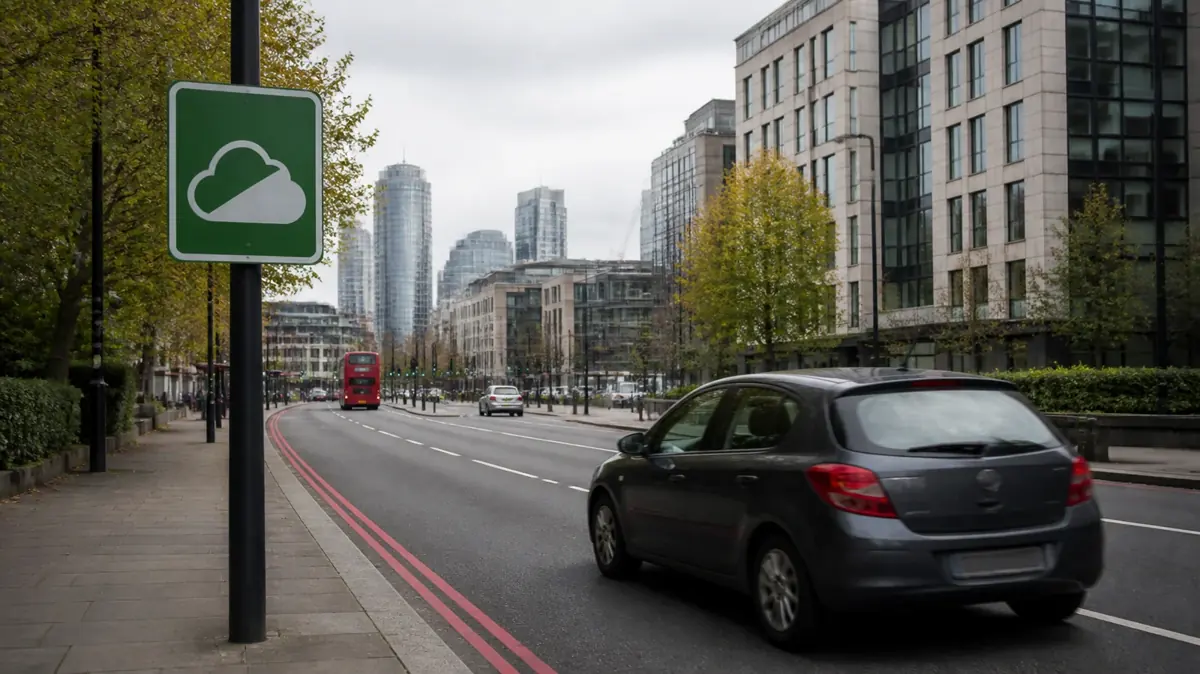
A car driving past a green low emission zone sign on a London street

A clean air zone checker tells you whether a vehicle is likely to be charged to enter a UK city’s low-emission area. Enter a registration number above and MOT Check Now reads the DVLA record, looks at the fuel type and Euro status, and estimates whether the vehicle would meet the standard in a Clean Air Zone that charges private cars. It is an estimate, and this page explains how it works, which zones really charge cars, how the zone classes differ, and what to do before you travel.

Clean Air Zones are a different system from London’s Ultra Low Emission Zone. London has its own scheme with its own checker, covered on our ULEZ checker page. This page is about everything else: the charging Clean Air Zones in English cities, the Low Emission Zones in Scotland, and the Zero Emission Zone pilot in Oxford. The most important point comes first: most Clean Air Zones do not charge private cars at all.

Quick answers

  • How many charging zones? GOV.UK lists seven: Bath, Birmingham, Bradford, Bristol, Portsmouth, Sheffield and Tyneside (Newcastle and Gateshead).
  • Which charge private cars? Currently only Birmingham and Bristol, both Class D.
  • Bristol charge: £9 per day for non-compliant private petrol and diesel cars.
  • Birmingham charge: roughly £8 per day for non-compliant cars. Check the council for the current figure.
  • Scotland: Low Emission Zones in Glasgow, Edinburgh, Aberdeen and Dundee, with separate rules.
  • Greater Manchester: no charging Clean Air Zone, as the plans were scaled back and cancelled.
  • Is our result official? No. Always confirm on the official council or GOV.UK page before you travel.
01

Key facts at a glance

Question Short answer
Charging Clean Air Zones in England (GOV.UK list) 7
Zones that charge private cars Birmingham and Bristol (Class D)
Zones that do not charge private cars Bath, Bradford, Sheffield, Tyneside (Class C) and Portsmouth (Class B)
Bristol daily charge for non-compliant cars £9
Birmingham daily charge for non-compliant cars Roughly £8, confirm with the council
Typical car standard in a Class D zone Petrol Euro 4 and above, diesel Euro 6
Scottish Low Emission Zones Glasgow, Edinburgh, Aberdeen, Dundee
Oxford Zero Emission Zone pilot with its own rules
Foreign-registered vehicles Cannot be checked on the GOV.UK service
GOV.UK helpline 0300 029 8888 (Mon to Fri 8am to 7pm excluding bank holidays, Sat 8am to 2pm)

How to use the clean air zone checker and what you will see

Type your registration number into the box at the top of this page. The result shows the make, colour, fuel type, engine size and year of manufacture from the DVLA record, plus the Euro status where one is held. From those details we give an estimate of whether the vehicle meets the emission standard used by Clean Air Zones that charge cars.

Because the answer depends on the zone, use the table in the next section to see whether a car would be charged in the place you are visiting. If the city is not one that charges private cars, the estimate is largely academic for a car, though it may matter for a van, taxi or HGV.

Sample result (example vehicle)
Nissan Qashqai

White · Diesel · 1,461cc · Built 2013

GBAB12 CDE
MOT validValid until 21 Mar 2027. 138 days left.
MOT expiry21 Mar 2027
Days left138
Last mileage113,209 mi
TaxedVehicle tax is in place.
Tax statusTaxed
Tax due29 Aug 2027
Last V5C issued8 May 2026

Vehicle details

Make
Nissan
Model
Qashqai
Colour
White
Fuel type
Diesel
Engine size
1,461 cc
Year of manufacture
2013
First registered
22 Mar 2013
CO2 emissions
127 g/km
Euro status
EURO 5
Marked for export
No

History indicators

Low concernAn indicator from the recorded MOT data, not a verdict.
  • The same advisories keep coming back.

Sources: DVSA MOT history and DVLA vehicle data. Contains public sector information licensed under the Open Government Licence v3.0.

A quick routine for using the result

  1. Check the make, colour and fuel type on screen against the vehicle.
  2. Look at the Euro status line, which is the strongest indicator we have.
  3. Read our estimate and note whether it used Euro status or only fuel type and year.
  4. Look up the zone you are visiting and its class, using the table below.
  5. Confirm with the official service before you travel.
03

What a Clean Air Zone is, and who has to pay

A Clean Air Zone is an area of a city where the most polluting vehicles are charged a daily fee to enter or drive within the boundary, or where they are discouraged from entering at all. The aim is to improve air quality, particularly nitrogen dioxide from road traffic. Zones are set up and run by local councils, and GOV.UK publishes the list of charging zones in England along with a service to check and pay.

Who pays depends on two things. The first is the class of the zone, which decides which types of vehicle can be charged at all. The second is whether the individual vehicle meets the emission standard that applies to its type. A vehicle that meets the standard is not charged, and one that does not is charged for each day it is driven in the zone, unless an exemption applies. Because a different class of zone covers a different set of vehicles, you need both pieces of information to know whether a journey will cost you money.

04

The seven charging Clean Air Zones

GOV.UK lists seven charging Clean Air Zones in England. The class of each zone decides which vehicles can be charged.

Zone Class Are private cars charged?
Bath C No
Birmingham D Yes
Bradford C No
Bristol D Yes
Portsmouth B No
Sheffield C No
Tyneside (Newcastle and Gateshead) C No

In short, private cars are currently charged only in Birmingham and Bristol, which are Class D zones. Bath, Bradford, Sheffield and Tyneside are Class C, which do not charge private cars. Portsmouth is Class B, aimed at buses, coaches, taxis and HGVs. If you drive a van, taxi or heavy vehicle, a Class B or C zone can apply to you even where cars are free, so do not read this table as a guide for commercial vehicles.

Clean Air Zone classes and who can be charged Class B Portsmouth Buses, coaches, taxis, HGVs Class C Bath, Bradford, Sheffield, Tyneside Class B vehicles plus vans Class D Birmingham, Bristol Class C plus private cars Each class includes the vehicle types of the class above it. Confirm on the official council page before you travel.
Each higher class covers more vehicle types. Only the Class D zones charge private cars.

What the classes mean

  • Class B: buses, coaches, taxis and HGVs. Portsmouth is the Class B zone.
  • Class C: the Class B vehicles plus other commercial vehicles, such as vans. No private cars.
  • Class D: everything in Class C, and private cars as well.

The classes are a useful shorthand but the council running each zone sets the detail, including the exact boundary, the charge for each vehicle type and any exemptions or time-limited discounts. Read the council page for the city you plan to visit, not just the class.

05

Euro standards for Clean Air Zones, in plain English

Euro emissions standards are a ladder of tailpipe limits that vehicles are approved against when new. Euro 3 is older and looser, Euro 4 and Euro 5 sit in the middle, and Euro 6 is the strictest of the steps relevant here. Each step is tougher than the last, especially on the nitrogen oxides from diesel engines that Clean Air Zones are designed to reduce.

For private cars in a Class D zone the pattern is consistent with other Euro-based schemes. Petrol cars generally need to meet Euro 4, which in practice covers most petrol cars registered from around 2006. Diesel cars need Euro 6, which broadly means registered from late 2015. A diesel that looks fairly modern but is Euro 5 can therefore fall short. The standard a vehicle meets depends on how it was approved, not on how old it looks, so the Euro status on the DVLA record is the most direct guide.

Fuel type Standard that avoids the Class D car charge Broadly registered from
Petrol Euro 4, 5 or 6 Around 2006
Diesel Euro 6 Late 2015
Fully electric Exempt Any date
Hydrogen fuel cell Exempt Any date

The registration dates are a guide. Check the official source for any individual vehicle.

06

Bristol Clean Air Zone

Bristol charges non-compliant private petrol and diesel cars £9 per day. A car is exempt if it is:

  • A petrol car meeting Euro 4, 5 or 6, which in practice means most petrol cars registered from around 2006.
  • A diesel car meeting Euro 6, which broadly means registered from late 2015.
  • Fully electric or hydrogen fuel cell.
  • Retrofitted and registered with CVRAS (the Clean Vehicle Retrofit Accreditation Scheme).
  • A motorbike.

This is a charge for a day of driving, so check the council’s rules on how the day is counted and the payment deadline. The charge and rules are set by Bristol City Council, which is the source to rely on.

A Bristol worked example

Imagine a diesel car registered in 2013 with Euro 5 on its DVLA record. Diesel cars need Euro 6 to avoid the Bristol charge, so this car would be non-compliant and chargeable at £9 for each day it is driven in the zone, unless it has been retrofitted and registered with CVRAS. A petrol car registered in 2008 with Euro 4 would be exempt. These are illustrations, not records of real vehicles.

07

Birmingham Clean Air Zone

Birmingham also charges non-compliant private cars. The daily charge for cars is roughly £8, and we do not quote a precise figure because it is set by the council and can change. Check the Birmingham City Council page for the current amount, the zone boundary and payment details before you drive in.

The standards for cars in a Class D zone follow the same pattern as other Euro-based schemes. Petrol cars generally need Euro 4 and diesel cars Euro 6, which is why a fairly recent diesel can still be charged. Our checker flags that by looking at fuel type and Euro status.

08

Zones that do not charge private cars

It is worth being clear about the five zones that do not currently charge private cars, because people often assume every Clean Air Zone is the same.

  • Bath, Bradford, Sheffield and Tyneside (Newcastle and Gateshead) are Class C. They can charge vans and other commercial vehicles, as well as buses, coaches, taxis and HGVs, but not private cars.
  • Portsmouth is Class B. It is aimed at buses, coaches, taxis and HGVs.

If you drive a private car you can still be affected indirectly, for example by diversions or by hiring a taxi or private hire vehicle into a zone. If you are a sole trader driving a van for work, the Class C zones are directly relevant. Our van MOT check will show the MOT record for the same vehicle, and the clean air zone estimate on this page applies to cars only in the sense that the standards follow the same Euro logic.

09

Scotland, Oxford and Greater Manchester

Scottish Low Emission Zones

Scotland uses Low Emission Zones rather than Clean Air Zones. There are four: Glasgow, Edinburgh, Aberdeen and Dundee. They are enforced separately and non-compliant vehicles can be fined. We do not quote amounts, as they are set locally and can change. The GOV.UK checker does not cover them, so look at each city’s official LEZ page.

Oxford Zero Emission Zone

Oxford has a Zero Emission Zone pilot. It is run by the local authorities, works differently from the Clean Air Zone classes and has its own rules, so read the Oxford scheme’s information before driving in the centre.

Why Greater Manchester is not charging

Greater Manchester’s charging Clean Air Zone plans were scaled back and then cancelled, so there is no charging Clean Air Zone in the area as there is in the cities above. If you see older articles describing a Greater Manchester charge, they are out of date.

London

London is not part of the GOV.UK Clean Air Zone service. It has its own Ultra Low Emission Zone, with a £12.50 daily charge for non-compliant vehicles. Read our ULEZ checker and the congestion charge check page for London.

10

How our clean air zone estimate works

Our estimate looks at the same three inputs as our London checker: fuel type, Euro status and registration year. We apply the Class D approach, which is the one that matters for private cars, and tell you whether the vehicle is likely to meet the standard. We do not know which zone you plan to visit, so the result is a general indication rather than a verdict for a specific city.

The limits of that method are worth stating plainly:

  • Where the DVLA record includes a Euro status we use it. Where it does not, we lean on registration year, which is less precise.
  • We cannot see retrofits, exemptions, discounts or payments. A retrofitted vehicle registered with CVRAS may be compliant even if our estimate says otherwise.
  • We cannot check vehicles registered outside the UK. The GOV.UK service has the same restriction.
  • Hybrids are judged on the Euro standard of their petrol or diesel engine. See the hybrid section on our ULEZ checker page for how that works.

How to read the result

What you see What it usually means What to do
Likely meets the standard The record suggests the vehicle would avoid the Class D car charge Confirm with the official check if you will drive in often
Likely does not meet the standard The vehicle could be charged in Birmingham or Bristol Check the council page, then pay, avoid the zone or change vehicle
Uncertain No Euro status on the record, so the result rests on year and fuel Rely on the official service
11

Edge cases: imports, hybrids, vans, motorcycles and missing records

Hybrids and plug-in hybrids

A hybrid is not a separate category. It is judged on the Euro standard of its petrol or diesel engine, so a newer petrol hybrid is very likely to meet the standard, while an older hybrid is not exempt just for being a hybrid. A fully electric vehicle is exempt.

Vehicles with no Euro status

Some older vehicles and some imports have no Euro status held on the DVLA record. Our estimate then depends on fuel type and year, so treat it as a prompt and confirm with the official service.

Imported vehicles

A vehicle imported and registered in the UK has a UK record, but the emissions details can be thinner than for a vehicle first sold here. If you are buying an import and plan to drive in Birmingham or Bristol, check the official service before you commit. A vehicle that is still registered outside the UK cannot be checked on the GOV.UK service at all, so contact the relevant council or the helpline for guidance.

Motorcycles

Bristol lists motorbikes as exempt. For any other zone, read the council page, because we cannot assume the same rule applies everywhere. See our motorcycle MOT check for the test record.

Vans, taxis and minibuses

Class B and C zones can charge vehicles that private-car drivers never think about. If you run a van, taxi or minibus, the class of the zone matters more than whether it charges cars. Our estimate is built around private cars, so treat it as a general guide only for commercial vehicles.

Retrofitted vehicles

Bristol exempts retrofitted vehicles registered with CVRAS. We cannot see a retrofit on the DVLA record, so a retrofitted vehicle can look non-compliant in our result. If your vehicle has been retrofitted, rely on the council’s rules and your scheme paperwork.

Rental, borrowed and company vehicles

Charges attach to the vehicle’s registration, not to the person who happens to be driving. If you hire or borrow a vehicle, check its registration before you drive into a zone, and ask the owner or hire firm how charges are handled. For a company car, ask the fleet manager before you travel.

12

The official GOV.UK check and pay service

For the authoritative answer, use the official service. GOV.UK runs a vehicle check and payment service for the Clean Air Zones in England, and you can find the current list of zones and links at GOV.UK Clean Air Zones. The service cannot check vehicles registered outside the UK, and London and Scotland are handled by separate checks, so those need their own tools.

If you need to talk to someone, the GOV.UK Clean Air Zone helpline is 0300 029 8888. It is open Monday to Friday from 8am to 7pm, excluding bank holidays, and on Saturday from 8am to 2pm.

How payment works in general terms

Charges are paid to the council running the zone, usually through the official GOV.UK service for English zones. The council sets the payment window and the consequences of missing it, and those can change. We do not take payment and cannot see whether a charge has been paid. Keep any confirmation, because it is your evidence if a notice arrives in error.

13

What to do if your vehicle would be charged

  1. Confirm the zone and class. Check the council page for the exact city and make sure your vehicle type is covered.
  2. Confirm the vehicle’s status. Use the official check with your registration, and compare it with our estimate.
  3. Pay if you must drive in. For an occasional trip, paying the daily charge may be the simplest route. Pay by the deadline the council sets.
  4. Route around the zone. Many zones are limited to a city centre, so a park and ride or a different route may avoid the boundary. Check the boundary on the council map.
  5. Consider other options for regular trips. If you will drive in often, look at whether a compliant vehicle or a retrofit would suit you. Retrofit eligibility is vehicle-specific, so ask the supplier and the council.
  6. Challenge a wrong charge. If you think a notice is wrong, follow the instructions on the notice and the council’s process, and keep your evidence.
14

Zones change: confirm before you travel

Check the official council page before you travel. Clean Air Zones, Low Emission Zones and their charges change. Zones are introduced, scaled back or cancelled, classes can be revised, and daily charges are reset. Anything on a third-party page, including this one, can be out of date by the time you drive. Confirm the zone, the class and the current charge on the official site for the city you are visiting.

A practical routine before any trip into a city:

  1. Find out whether the destination has a charging zone, using the GOV.UK list or the council’s own page.
  2. Check the zone’s class, which tells you whether your vehicle type is covered.
  3. Run the registration through the official check, and compare it with our estimate.
  4. Note the payment deadline and how to pay, so you do not miss it.
  5. If you cross several cities on a route, check each one, because rules are not shared.
15

Common mistakes

  • Assuming every Clean Air Zone charges cars. Only Birmingham and Bristol currently do.
  • Confusing a Clean Air Zone with ULEZ. London’s ULEZ, the Scottish LEZs and the English CAZs are separate schemes. The ULEZ checker deals with London.
  • Using the GOV.UK checker for London or Scotland. Those areas have their own checks.
  • Relying on old news. Greater Manchester is the usual example of a zone that did not go ahead as first planned.
  • Judging compliance by age. Euro status decides, and a recent diesel may not qualify.
  • Forgetting vans and taxis. Class B and C zones can charge commercial vehicles even where cars are free.
  • Using a foreign plate. The GOV.UK service cannot check vehicles registered outside the UK.
  • Quoting a charge from memory. Charges are reset. Always read the current figure on the council page.
  • Typing the wrong registration. One wrong character returns a different vehicle, so compare the make and colour on screen.
16

Buying a car for city driving

If you are choosing a used car partly with zones in mind, compliance is one factor among several. Pair the estimate with a look at the MOT history, the mileage check and the tax status, and work through the used car checklist. For a single check covering MOT, tax and vehicle details, use the vehicle check or browse the guides. If you are comparing a few candidates, compare cars puts them side by side.

A diesel that is not Euro 6 may be cheap to buy for a reason. If you will drive regularly into Birmingham or Bristol, add the daily charge to your running costs before you decide, and check the council page for the current figure.

17

Clean Air Zones, Low Emission Zones and ULEZ compared

The names are used loosely in everyday speech, which is a big source of confusion. The table below sets out how the main schemes differ in broad terms. It uses only the facts we can state, and the council or authority for each scheme has the full rules.

Scheme Where Who runs it Private cars charged?
Clean Air Zones Bath, Birmingham, Bradford, Bristol, Portsmouth, Sheffield, Tyneside Local councils, with a GOV.UK check and pay service Only in Birmingham and Bristol (Class D)
Low Emission Zones Glasgow, Edinburgh, Aberdeen, Dundee Scottish local authorities Non-compliant vehicles can be fined, check each city
Ultra Low Emission Zone All London boroughs Transport for London Yes, £12.50 per day if non-compliant and not exempt
Zero Emission Zone pilot Oxford Local authorities Its own rules, read the scheme information
18

Why zones appear, change and sometimes disappear

Clean Air Zones exist because some UK towns and cities have struggled to bring road-traffic pollution within legal limits, and a charge on the most polluting vehicles is one tool councils can use. Because they are local schemes, they are shaped by local decisions, funding and consultation. That is why the list is not the same in every part of the country, why the classes differ, and why a scheme can be scaled back or cancelled, as happened with the charging plans in Greater Manchester.

For a driver, the practical lesson is simple. Never assume that a rule you read last year still applies, and never assume that the rule in one city applies in another. Charges are reviewed, vehicle categories can be revised and new zones can be announced. Treat any page that is not run by the council or by GOV.UK, including this one, as a starting point and check the official source before you set off.

19

Scenarios: what different drivers should check

These short scenarios are illustrations to help you work out which questions matter for your own journey. They are not records of real vehicles or real trips.

A commuter with an older diesel car who works in Bristol

The first question is whether the car meets Euro 6. If the record shows Euro 5 or lower, the car is non-compliant for the Bristol zone and would be charged £9 per day for each day it is driven in the zone, unless it has been retrofitted and registered with CVRAS. Over a working month that adds up, so the commuter should check the Bristol City Council page, compare the cost with alternatives such as park and ride or a different vehicle, and run the car through the MOT history so any repair bills are visible too.

A family with a newer petrol car visiting Birmingham for a day

A petrol car that meets Euro 4 or better is likely to avoid the charge. The family should still glance at the Birmingham City Council page for the zone boundary and current rules, and confirm the car using the official GOV.UK service. If the result agrees with ours, they can travel without worry.

A tradesperson with a diesel van working across several cities

This driver is more exposed than a car driver because Class C zones can charge vans. The tradesperson needs to list every city on the route, check the class and charge in each, and see whether the van meets the standard. A single check is not enough, because each zone is separate.

A visitor arriving in a vehicle registered abroad

The GOV.UK service cannot check vehicles registered outside the UK, and neither can we. The visitor should contact the relevant council or the GOV.UK helpline before travelling to find out how to be assessed and how to pay. London and Scotland have their own schemes and their own rules for foreign vehicles.

Someone buying a used diesel for city use

Before buying, check the Euro status. A Euro 6 diesel is the standard that avoids the Class D car charge. A cheaper Euro 5 diesel may cost more in the long run if you drive into a charging zone often. Combine this with the MOT history and the guide to reading MOT history, so the full picture is in front of you.

20

A pre-travel checklist

  • I know which cities on my route have a charging zone, and I have checked the official list.
  • I know the class of each zone and whether it covers my vehicle type.
  • I have run the registration through the official check, and I have compared it with our estimate.
  • I know the current charge, the payment deadline and how to pay, from the council page.
  • I have checked whether a retrofit or other exemption applies to my vehicle, and I have the paperwork.
  • I have a note of the helpline number in case something goes wrong.
21

Glossary

Clean Air Zone (CAZ)
An area where the most polluting vehicles may be charged to enter or drive. Run by local councils.
Class B, C and D
The categories of CAZ that decide which vehicle types can be charged. Only Class D includes private cars.
Low Emission Zone (LEZ)
The term used in Scotland and for some heavy vehicles in London.
Zero Emission Zone (ZEZ)
A zone aimed at zero tailpipe emissions. Oxford has a pilot.
Euro status
The Euro emission standard shown on a vehicle’s DVLA record, where held.
CVRAS
The Clean Vehicle Retrofit Accreditation Scheme. Bristol exempts retrofitted vehicles registered with it.
HGV
Heavy goods vehicle.
Retrofit
A modification that cuts a vehicle’s emissions.

Limits of this checker, and where our data comes from

The checker works from the DVLA Vehicle Enquiry Service and has no direct feed from any council. It cannot see exemptions, discounts, retrofits or payments, and it cannot check non-UK vehicles. It will not tell you whether the vehicle is insured or roadworthy, though the same record includes the tax status and MOT status. Read how we get our data and our editorial policy to see how we handle sources and corrections, or visit about us. If something on this page is wrong or out of date, contact us.

MOT Check Now is independent and not affiliated with the DVLA, DVSA, GOV.UK or any council. The data comes from the DVLA Vehicle Enquiry Service. Registration numbers entered are processed to fetch the vehicle record. Contains public sector information licensed under the Open Government Licence v3.0. The paid Full Vehicle Report is £3.99 and covers MOT, mileage and vehicle details, though it does not include finance, stolen or write-off data.

Full Vehicle Report (PDF)

Complete MOT timeline, mileage analysis, recurring advisories and a plain-English summary in one downloadable document.

Frequently asked questions

Which UK cities have charging Clean Air Zones?

GOV.UK lists seven charging Clean Air Zones: Bath, Birmingham, Bradford, Bristol, Portsmouth, Sheffield and Tyneside (Newcastle and Gateshead). London and Scotland run separate schemes, and zones can change, so confirm on the official council page.

Do I have to pay a Clean Air Zone charge in a private car?

Currently only in Birmingham and Bristol, which are Class D zones. Bath, Bradford, Sheffield and Tyneside are Class C and do not charge private cars, and Portsmouth is Class B for buses, coaches, taxis and HGVs.

How much is the Bristol Clean Air Zone charge?

Bristol charges u00a39 per day for non-compliant private petrol and diesel cars. Petrol Euro 4, 5 and 6 cars, diesel Euro 6 cars, electric and hydrogen vehicles, CVRAS-registered retrofits and motorbikes are exempt.

How much is the Birmingham Clean Air Zone charge?

The charge for non-compliant cars is roughly u00a38 per day, but the council sets it and it can change. Check the Birmingham City Council page for the current figure before you travel.

Is there a Clean Air Zone in Greater Manchester?

No charging Clean Air Zone is operating there, because Greater Manchester's plans were scaled back and cancelled. Older articles describing a charge are out of date.

How do I check a Clean Air Zone for my vehicle?

Use our checker for a quick estimate from fuel type and Euro status, then confirm with the official GOV.UK check and pay service. The helpline is 0300 029 8888, open Monday to Friday 8am to 7pm and Saturday 8am to 2pm, excluding bank holidays.

Is a Clean Air Zone the same as ULEZ?

No. ULEZ is London's separate scheme with a u00a312.50 daily charge, while Clean Air Zones operate in other English cities and Scotland has Low Emission Zones. Each has its own rules and checker.

Can I check a foreign-registered vehicle?

The GOV.UK Clean Air Zone service cannot check vehicles registered outside the UK, and our checker works from UK DVLA records, so it cannot either. Contact the relevant council or the helpline for guidance.

What do Class B, C and D mean?

They are the categories of Clean Air Zone. Class B covers buses, coaches, taxis and HGVs. Class C adds vans and other commercial vehicles. Class D adds private cars. Only Class D zones charge private cars.

Why might a fairly new diesel car be charged?

Diesel cars generally need Euro 6, which broadly means registered from late 2015. A diesel registered before that may be Euro 5 or lower, so it can be charged even if it looks modern. Check the Euro status on the record.

Are hybrids and electric cars charged?

Fully electric and hydrogen fuel cell cars are exempt in Bristol, for example. A hybrid is judged on the Euro standard of its petrol or diesel engine, so an older hybrid is not automatically exempt.

Do the Scottish Low Emission Zones work the same way?

No. Glasgow, Edinburgh, Aberdeen and Dundee have Low Emission Zones with their own rules and separate enforcement, and non-compliant vehicles can be fined. Check each city's official LEZ page.

Does Oxford have a Clean Air Zone?

Oxford has a Zero Emission Zone pilot run by the local authorities. It works differently from the Clean Air Zone classes, so read the scheme's own information before you drive in the centre.

Can a van or taxi be charged where cars are not?

Yes. Class B and C zones can charge buses, coaches, taxis, HGVs and, in Class C, vans, even where private cars are free. Check the zone class and the council rules.

Need it all in one document?

The Full Vehicle Report gives you the complete MOT timeline, mileage analysis and summary as a PDF you can keep.

Get the report £3.99